

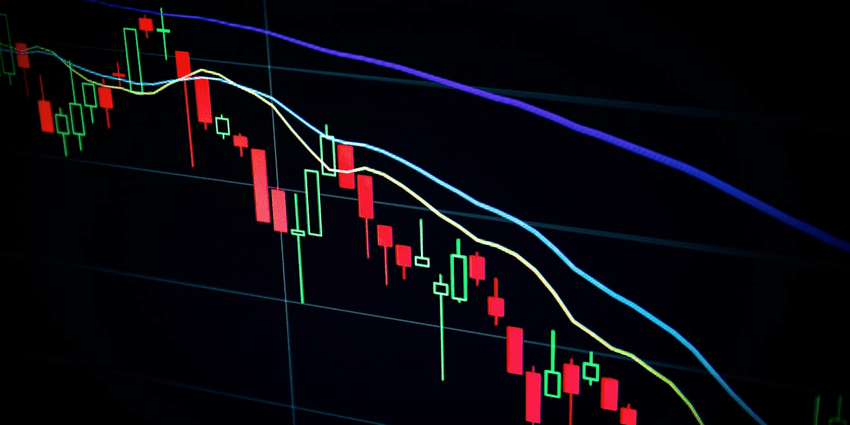

If you're wondering why Bitcoin just tanked from $71k to $68k in the past 24 hours while you were sleeping, here's your answer: $14.16 billion worth of Bitcoin options expire tomorrow morning at 4 AM Eastern (08:00 UTC), and the market is positioning for what could be the most violent price swing we've seen in months. This is the quarterly expiry-40% of all open interest on Deribit gets wiped in a single hour. And the "max pain" level sitting at $75k means we could see a vicious move in either direction before this is over.
The crypto market cap dropped 3.3% to $2.43 trillion TODAY. Bitcoin fell 3.4%. Ethereum dropped 4.8%. Solana crashed 5.5%. This isn't random—this is institutional money positioning for tomorrow's options nuke. Here's everything you need to know in the next 12 hours.
What the Hell Is Happening (The Quick Version)
Tomorrow morning, the largest quarterly Bitcoin options expiry of 2026 hits. We're talking about $14.16 billion in contracts settling simultaneously on Deribit, the world's dominant crypto derivatives exchange.
Here's the critical part most people don't understand: these aren't just numbers on a screen. Options expirations create mechanical price pressure through something called delta hedging. Market makers who sold these options have been hedging their exposure by buying and selling Bitcoin spot and futures. As we approach expiry, that hedging activity intensifies and creates a gravitational pull toward a specific price level.
That level? $75,000.
It's called "max pain"—the price where the most options expire worthless, where option buyers lose the most money and option sellers (institutions, market makers) make the most profit.
The Numbers That Matter
Total Expiring: $14.16 billion in Bitcoin options
Percentage of Deribit OI: Nearly 40% of all open interest
Max Pain Level: $75,000
Current BTC Price: $68,878 (as of March 27)
Gap to Max Pain: +8.9% move needed
Put/Call Ratio: 0.63 (more bullish than bearish bets)
Settlement Time: 08:00 UTC March 28 (4 AM Eastern)
Why Bitcoin Dropped to $68k TODAY
Let's connect the dots on what happened in the past 24 hours:
The Setup (Past Week)
Bitcoin has been stuck in a frustrating range between $69k and $72k for over a week. Every time it touched $72k, sellers showed up. Why? Because there's massive open interest in call options (bullish bets) with strikes at $72k, $75k, and $80k.
Market makers who sold those calls have been hedging by shorting Bitcoin. As the price climbed toward $72k, their delta hedge forced them to sell MORE Bitcoin to stay neutral. This created a ceiling.
The Catalyst (Past 48 Hours)
Three things converged:
Middle East tensions flared up again. Iran rejected Trump's proposed peace deal, sending oil back above $100/barrel. Risk-off sentiment hit crypto hard.
Bitcoin ETF outflows accelerated. $124 million in redemptions on March 25 alone—the fifth straight day of outflows. Institutions are pulling capital OUT of Bitcoin exposure.
Short positions spiked. Futures open interest hit a one-week high as traders built short bets ahead of the expiry. They're betting Bitcoin falls or stays flat.
The Result (Today)
Bitcoin cracked the $69k support level that had held for days. Once that broke, stop-losses triggered, liquidations cascaded, and we're now sitting at $68.8k—testing the 200-day moving average at $69.2k.
This isn't random selling. This is calculated positioning ahead of a massive derivatives event. Institutions know what's coming tomorrow, and they're getting their books positioned NOW.
How "Max Pain" Actually Works (And Why It Matters)
Most crypto articles mention max pain but don't explain the actual mechanism. Here's how it REALLY works:
The Theory
Max pain is the strike price where the maximum number of options (both calls and puts) expire worthless. At this price, option buyers collectively lose the most money, and option sellers (market makers, institutions) collectively make the most profit.
For tomorrow's expiry, that magic number is $75,000.
The Mechanics
Market makers don't want directional exposure. When they sell you a call option at $80k, they immediately hedge by buying Bitcoin (or futures). If the price goes up, their hedge gains value to offset the loss on the option they sold.
As expiry approaches, this hedging becomes extreme. It's called gamma hedging, and it creates price pressure:
- If Bitcoin is BELOW max pain, market makers have to BUY to hedge their positions → pushes price UP toward $75k
- If Bitcoin is ABOVE max pain, market makers have to SELL to hedge their positions → pushes price DOWN toward $75k
Right now, Bitcoin is at $68.8k—BELOW the $75k max pain. If the theory holds, we should see buying pressure over the next 12 hours pulling Bitcoin higher.
Does It Actually Work?
According to research from CoinDesk and Deribit, Bitcoin settles within 5% of max pain approximately 60-65% of the time on quarterly expiries.
That's not 100%, but it's way better than random chance. On weekly or monthly expiries, the signal is weaker. But quarterly expiries with huge open interest? Max pain is a legitimate force.
The Three Scenarios for the Next 12-48 Hours
Based on historical expiry patterns, current positioning, and macro backdrop, here are the realistic scenarios:
Scenario 1: The Max Pain Magnet (60% Probability)
What happens: Bitcoin drifts higher from $68.8k toward $74k-$76k over the next 12 hours. Volatility is relatively controlled. The expiry settles close to $75k, most options expire worthless, and then the REAL move starts AFTER the expiry clears.
Why this is likely:
- Implied volatility has been compressing (down 6 points this week), suggesting traders expect a controlled event
- The put/call ratio at 0.63 shows moderate bullish bias, not extreme positioning either way
- Historical precedent: 60-65% of quarterly expiries settle near max pain
- Market makers have 12 hours to nudge price toward $75k through normal spot/futures trading
Trading implication: Don't fight the gravitational pull. If you're short, consider covering before settlement. If you're long, wait for the post-expiry move rather than chasing the grind to $75k.
Scenario 2: The Breakdown (25% Probability)
What happens: Bitcoin loses the 200-day MA at $69.2k decisively. Stop-losses trigger, liquidations cascade, and we see a flush to $67k or even $65k BEFORE expiry. Max pain theory breaks because external macro forces overpower options mechanics.
Why this could happen:
- Middle East tensions escalate further (Iran conflict spreads)
- More Bitcoin ETF outflows hit the tape tomorrow morning
- PCE inflation data (released Friday) comes in hot, killing hopes for Fed rate cuts
- Large whale or institution decides to dump ahead of expiry
Key trigger: A decisive 4-hour candle close below $68,500 with volume would confirm this scenario.
Trading implication: If you see $68.5k break with conviction, the next support is $67k. Set alerts and don't try to catch a falling knife.
Scenario 3: The Breakout (15% Probability)
What happens: Bitcoin rips through $72k before settlement, invalidating the max pain thesis entirely. We see a violent short squeeze to $76k-$78k as the post-expiry volatility release happens EARLY.
Why this is less likely but possible:
- Surprise positive macro news (Iran peace deal actually happens, Fed signals dovish shift)
- Large institutional buyer steps in (like when MicroStrategy adds to their stack)
- Short squeeze mechanics: if too many traders are positioned for max pain, a breakout could force brutal covering
Key trigger: A clean break above $72k with volume on a 4-hour close.
Trading implication: This would be the most painful outcome for the most people, which means it could be violently explosive. If it starts, don't fade it—ride it.
What Happens AFTER the Expiry (This Might Matter More)
Here's what most people miss: the settlement itself isn't the main event. It's what happens in the 24-72 hours AFTER expiry that creates the biggest moves.
Why Post-Expiry Volatility Spikes
During the lead-up to expiry, massive open interest creates a dampening effect on volatility. All that gamma hedging and positioning acts like a lid on price movement. Once the expiry settles at 08:00 UTC tomorrow:
- 40% of Deribit's open interest disappears instantly
- Market makers no longer need to hedge those positions
- The "lid" comes off
- Real directional moves can start
Think of it like a pressure cooker valve releasing. The expiry is the release point.
Historical Pattern
Looking at past quarterly expiries in 2025:
- March 21, 2025: Bitcoin was slightly down on expiry day, then bottomed around $76k a few weeks later following Trump's tariff announcement
- June 20, 2025: Bitcoin declined 1.5% on expiry, then drifted lower reaching $98k just two days later
- September 2025: Post-expiry saw a 12% move within 48 hours
- December 2025: The Boxing Day expiry led to a violent pump in early January
The pattern? The day OF expiry is often choppy and controlled. The days AFTER are when directional conviction returns.
What to Watch Friday-Monday
Where does Bitcoin settle? If it's at/near $75k, that confirms max pain worked. If it's far from $75k, external forces won the tug-of-war.
How fast does open interest rebuild? Check Deribit OI after settlement. If it rebuilds quickly to new strikes, that shows conviction. If it stays low, that shows uncertainty.
Which way does volume flow? Is the first big move after expiry a pump or dump? The initial direction often sets the trend for days/weeks.
PCE inflation data (Friday): This macro catalyst hits the same day as expiry. If inflation comes in higher than expected, it could kill any post-expiry rally.
How This Affects Altcoins and the Broader Market
Bitcoin doesn't exist in a vacuum. This expiry has ripple effects across the entire crypto market.
Current Altcoin Damage
As of March 27:
- Ethereum: -4.8% to $2,070
- Solana: -5.5% to $86.67
- XRP: -3.3% to $1.36
- Cardano: -4.5%
- Total crypto market cap: -3.3% to $2.43 trillion
Altcoins ALWAYS get hit harder than Bitcoin during volatility events. Why? Liquidity flows OUT of riskier assets and into the "safest" crypto (BTC) or out of crypto entirely.
The Post-Expiry Altcoin Trade
Historically, if Bitcoin establishes a clear direction after a major expiry, altcoins follow with AMPLIFIED moves:
- If BTC pumps 5% post-expiry → ETH/SOL might pump 8-12%
- If BTC dumps 5% post-expiry → ETH/SOL might dump 10-15%
The leverage is both upside and downside.
Strategy for altcoin holders:
- If you're holding altcoins and Bitcoin breaks DOWN post-expiry, expect more pain. Consider reducing exposure.
- If you're waiting to buy altcoins, wait for Bitcoin to establish direction. Don't catch falling knives.
- If you're trading altcoins actively, the first 24 hours post-BTC-expiry often offers the best setups as correlation trades become obviousс
The Macro Wildcard: Iran and Middle East Tensions
We can't talk about this expiry without addressing the elephant in the room: geopolitical risk.
Bitcoin has been trading in a frustrating range NOT just because of options positioning, but because the Iran conflict is creating massive uncertainty:
- Oil prices spiked above $100/barrel
- raditional safe havens (gold, bonds) are rallying
- Risk assets (stocks, crypto) are under pressure
- Trump proposed a "15-point peace plan" which Iran called fake news
The five-day deadline for Iran talks expires March 28-THE SAME DAY as the options expiry.
This isn't coincidence. It's chaos.
What You Should Do in the Next 12 Hours
Enough analysis. Here's the practical game plan:
If You're a Long-Term Holder (Not Trading)
- Do nothing. Seriously. Expiry-day volatility is noise if you're holding for months/years
- Maybe add more IF: We see a flush to $67k or below. That would be an attractive entry for long-term accumulation.
- Don't panic sell at $68k. This is likely temporary positioning, not a trend change.
If You're Actively Trading
- Set alerts, don't stare at charts. Key levels: $72k (breakout), $69.2k (200-day MA), $68.5k (breakdown)
- Reduce position size going into expiry. Volatility creates risk. Smaller positions = less stress.
- Wait for post-settlement clarity. The best trades often come 6-12 hours AFTER expiry, not before.
- Don't try to perfectly time max pain. If you think Bitcoin will hit $75k, just buy now and hold through expiry. Trying to scalp the exact move is usually a losing game.
If You're Short Bitcoin
- Consider covering before 08:00 UTC. If max pain works, you'll get squeezed from $68k to $75k.
- If you stay short, have a stop. Don't let a rip to $76k+ blow up your account.
- The best short entry might be AFTER expiry. If Bitcoin pumps to $75k-$76k on max pain, that could be a high-probability short back to the $70k range.
If You're Looking to Buy Altcoins
- Wait. Do not buy altcoins while Bitcoin is in expiry volatility.
- Watch Bitcoin's post-expiry direction. If BTC establishes an uptrend, THEN deploy into alts.
- If you can't wait, stick to majors. ETH and SOL have better liquidity than small caps during chaos.
The Bottom Line
$14.16 billion in Bitcoin options expire in approximately 12 hours. This is one of the largest quarterly derivatives events in crypto history, representing 40% of Deribit's total open interest.
Bitcoin dropped 3.4% TODAY to $68.8k as institutions position for tomorrow's nuke. The "max pain" level sits at $75k, which means we could see significant price movement toward that level over the next few hours as market makers delta-hedge their exposure.
Here's what matters:
- ⏰ Expiry Time: 08:00 UTC March 28 (4 AM Eastern / 1 AM Pacific)
- 🎯 Max Pain: $75,000
- 📍 Current Price: $68,878
- 📊 Gap: +8.9% move needed to hit max pain
- 🔮 Historical accuracy: Bitcoin settles within 5% of max pain 60-65% of the time on quarterly expiries
But max pain isn't guaranteed. External catalysts-Iran tensions, ETF flows, PCE inflation data Friday, whale movements-can and do overpower options mechanics. The 200-day moving average at $69.2k is the critical support to watch. Break that, and we're looking at $67k or lower.
The real opportunity might not be today or tomorrow-it's in the 24-72 hours AFTER expiry when the volatility lid comes off and directional conviction returns.
Stay sharp. Set your alerts. And remember: the best trades often come from patience, not prediction.
We'll be updating this article as the situation develops.


