

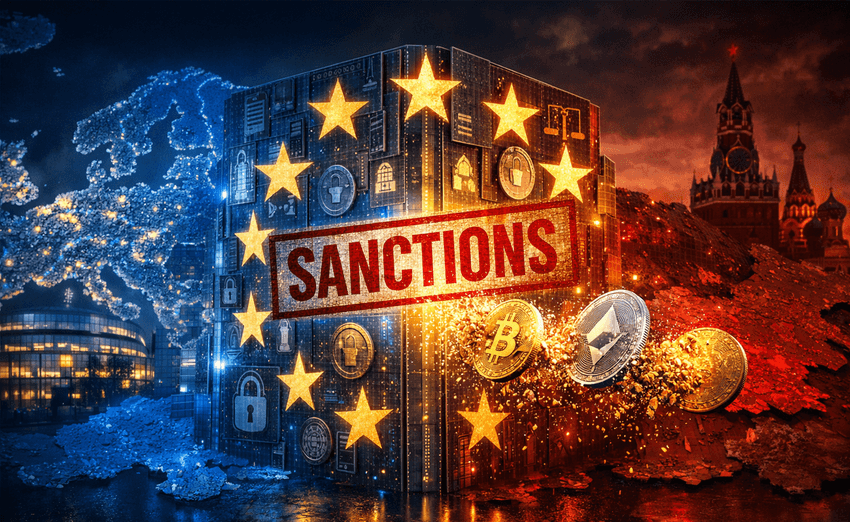

The European Union is weighing a sweeping ban on cryptocurrency transactions involving Russia, aiming to close loopholes that officials believe are being exploited to evade Western sanctions. According to a document obtained by the Financial Times, the proposed measures would specifically target so-called “copycat Russian crypto entities” that emerged after earlier platforms were blacklisted.
At the center of the EU’s concerns is Garantex, a Moscow-linked exchange sanctioned by both the EU and the United States last year. European officials now argue that successor platforms may be operating as functional “heirs,” enabling continued digital asset flows tied to Russia’s war efforts in Ukraine.
The proposal reflects mounting anxiety in Brussels that crypto infrastructure is being used as a sanctions workaround, particularly as traditional financial channels remain heavily restricted.
Sanctions focus shifts to digital rails
The new measures would go beyond targeting individual platforms. EU policymakers are reportedly exploring a blanket ban on crypto transactions involving Russia, effectively isolating the country from European-based digital asset markets.
According to blockchain analytics firm TRM Labs, Garantex - alongside Iran-based exchange Nobitex - accounted for more than 85% of inflows to sanctioned entities and jurisdictions in 2024. U.S. authorities have previously stated that much of the activity flowing into Garantex originated from exchanges linked to criminal networks.
The U.S. Treasury’s Office of Foreign Assets Control (OFAC) redesignated Garantex last year, reinforcing Washington’s position that crypto remains a significant vector for illicit cross-border transfers.
If enacted, the EU’s proposal would represent one of the most aggressive crypto-related sanctions actions globally, signaling a shift from platform-specific penalties to systemic restrictions.
Kyrgyzstan trade under scrutiny
The draft sanctions package reportedly also casts attention on Kyrgyzstan, alleging that companies in the country facilitated exports of dual-use goods - including electronics used in drones and weapons - to Russia.
According to the document cited by the Financial Times, imports of high-priority goods from the EU to Kyrgyzstan have surged nearly 800% since the war began, while Kyrgyz exports to Russia have climbed 1,200% over the same period. EU officials argue this trade pattern demonstrates a “particularly high risk of circumvention.”
Though not directly crypto-related, the broader trade scrutiny highlights how sanctions enforcement is expanding across financial and commercial channels simultaneously, with digital assets forming one piece of a larger puzzle.
Political hurdles ahead
For the proposal to move forward, it would require unanimous approval from all 27 EU member states. According to reporting, at least three countries have expressed reservations about implementing such a sweeping ban, potentially complicating negotiations.
Some member states are reportedly concerned about enforcement complexity, jurisdictional overreach, and unintended consequences for legitimate digital asset businesses operating within Europe.
Still, momentum appears to be building in Brussels as policymakers seek to prevent crypto platforms from acting as alternative settlement rails for sanctioned Russian entities.
If approved, the measure would reinforce Europe’s broader strategy of tightening financial controls while signaling that cryptocurrency markets are now firmly embedded in geopolitical enforcement frameworks.


