

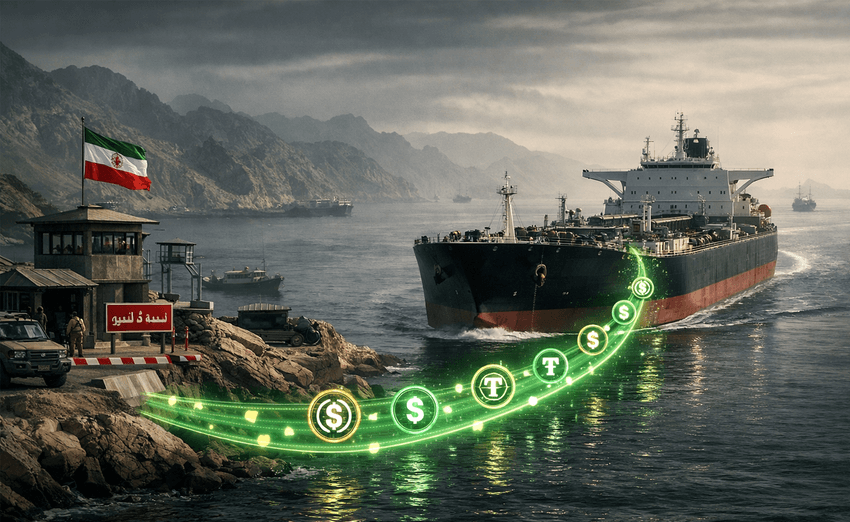

Iran Puts a Price on Passing Through Hormuz
Iran is introducing a new toll system for ships crossing the Strait of Hormuz, starting at roughly $1 per barrel of oil-and notably, payments may be made in stablecoins.
The proposal was approved by Iran’s National Security Committee and is now evolving into a fully structured transit system involving screening, payments, and military coordination.
This marks a major shift in how one of the world’s most important energy corridors could operate, especially as geopolitical tensions remain elevated.
Crypto Enters Global Trade Infrastructure
One of the most striking elements of the plan is the payment method. Instead of relying on traditional currencies like the U.S. dollar, Iran is pushing for settlements in Chinese yuan or stablecoins such as USDT and USDC.
This signals a growing trend where crypto is being used as a workaround for geopolitical and financial restrictions, particularly in regions facing sanctions or currency limitations.
In this case, stablecoins offer - speed, global accessibility, and reduced reliance on Western financial systems.
Strict Screening Before Entry
The process for passing through Hormuz is no longer straightforward. Ship operators must first submit detailed documentation through an intermediary linked to Iran’s military structure.
This includes vessel ownership, cargo details, crew data, and tracking information. Once submitted, the request is reviewed by the IRGC Navy, which screens ships for ties to countries Iran considers hostile, including the U.S. and Israel.
Only after passing this stage can negotiations for the toll begin.
Payment, Permits, and Military Escorts
Once a vessel is approved and payment is agreed, the system becomes highly controlled. Ships receive a permit code and are assigned a specific route through the strait.
They must broadcast this code as they approach and may be escorted by Iranian patrol vessels through designated coastal pathways.
In some cases, ships may even be required to change their flag registration temporarily, depending on the agreement secured for transit.
Real-World Impact Already Emerging
The system is not just theoretical-it is already influencing global shipping behavior. A recent example involved Pakistan, which secured passage for 20 vessels but lacked enough eligible ships under its own flag.
This forced the country to approach major commodity traders and explore temporary flag arrangements, highlighting how quickly the new rules are reshaping logistics.
Markets React to Geopolitical Shifts
The announcement has already sent ripples through global markets. Oil prices surged sharply, with Brent crude briefly hitting levels not seen since the 2008 financial crisis.
At the same time, stock markets reacted to shifting expectations around the conflict, especially after signals that Iran and Oman are working on a joint framework to monitor and coordinate transit through the strait.
Iran’s Deputy Foreign Minister Kazem Gharibabadi emphasized that the goal is not restriction but coordination, stating:

A Strategic Shift Away From the Dollar
The bigger story here goes beyond oil-it’s about currency power. By requesting payments in yuan and stablecoins, Iran is actively reducing dependence on the U.S. dollar in global trade flows.
This aligns with a broader trend where countries explore alternative settlement systems, especially under geopolitical pressure.


