

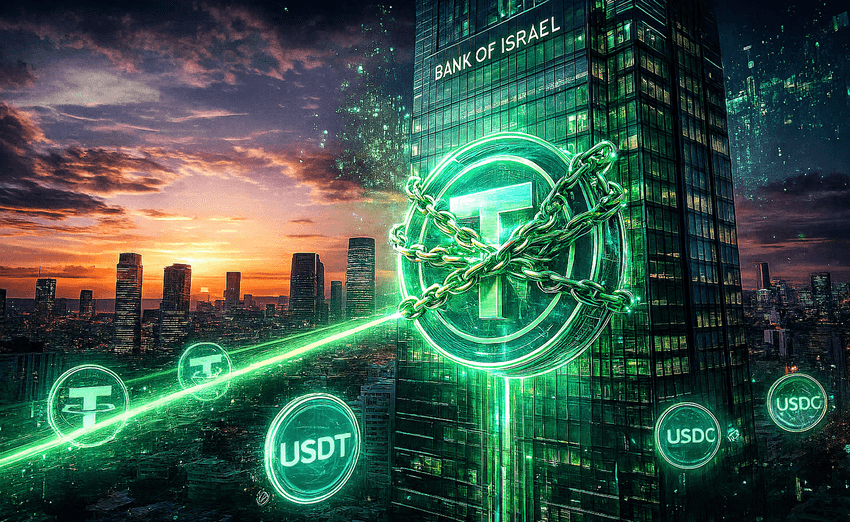

Israel Moves to Rein In Stablecoins Before Launching Its Own CBDC
Privacy, monetary control, and financial stability are pushing Israel toward sweeping new oversight rules for private stablecoin issuers. During a payments conference in Tel Aviv, Bank of Israel Governor Amir Yaron revealed that the regulator is finalizing a framework that will govern all stablecoin activity in the country - and the timing is intentional. With the digital shekel scheduled for 2026, Israel wants to avoid a situation where private tokens undermine its monetary authority.

A Bank of Israel report noted that the global stablecoin market has exceeded $300 billion, with monthly transaction volumes surpassing $2 trillion, making it comparable to the balance sheet of a mid-sized commercial bank.
U.S. Dollar Dominance Raises Red Flags
Israeli regulators are especially alarmed by the near-total dominance of U.S. dollar–backed stablecoins, with 99% of all global activity tied to Tether (USDT) and Circle (USDC). This level of concentration, officials argue, creates a “structural vulnerability” where disruptions at a single issuer could cascade across global payment rails.
Yaron stressed that Israel must prepare for “significant contagion risks” stemming from foreign stablecoin issuers whose policies fall outside Israel’s control. This concern has accelerated the push for a strict domestic licensing system.
Israel to Require Licenses, Full Reserves, and Strict Reporting
Lorem ipsum dolor sit Under the new rules, all stablecoin issuers serving Israeli users - both domestic and foreign - will need a Bank of Israel license. That licensing process will involve:
- Full reserve backing in liquid assets like government bonds or bank deposits
- Mandatory reporting and continuous supervisory monitoring
- Technology, cybersecurity, and financial resilience reviews
- Tight compliance with AML and counter-terror financing requirements
The Bank of Israel also warned that it will revoke licenses from issuers that threaten monetary policy or mislead the public.
Digital Shekel: On Track Despite Regulatory Turbulence
At the conference, Yoav Soffer, head of the digital shekel project, presented a roadmap marking 2026 as the first year of full deployment. He described the CBDC as “central bank money for everything”, intended to modernize payments across retail, business, and government services.
But Israel’s digital currency pilots have not been smooth. Regulators recently shut down local access to Bitin, an unlicensed exchange tied to compliance violations, and issued fines totaling 1.7 million shekels. The platform had previously offered trading in BTC, ETH, LTC, XRP, USDT, and USDC.
Crypto Usage Surges Following Hamas Attack
Despite regulatory crackdowns, Israel’s crypto activity has surged. According to Chainalysis, Israel recorded more than $713 billion in inflows between 2024 and 2025 - a dramatic increase attributed in part to the aftermath of the October 7, 2023 Hamas attack.
Crypto volumes jumped 60.4% above expectations, as households and businesses turned to digital assets during the period of heightened uncertainty.
The surge has also intensified scrutiny of foreign exchanges. A lawsuit filed in the U.S. last week accused Binance of facilitating transactions tied to terrorist activity by failing to act on compliance warnings.


