

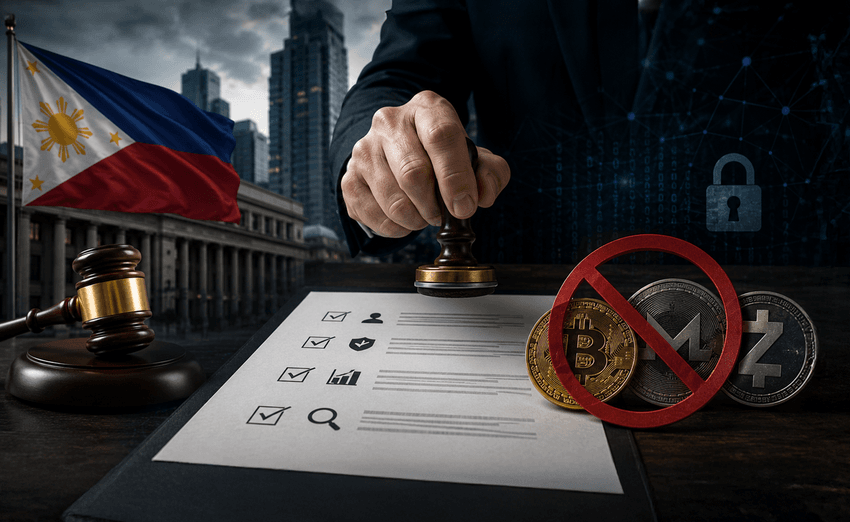

The Bangko Sentral ng Pilipinas (BSP) has unveiled a new set of cryptocurrency regulations that significantly tighten oversight of digital asset platforms operating in the country. The updated framework requires licensed Virtual Asset Service Providers (VASPs) to implement stricter listing standards for cryptocurrencies while completely prohibiting the support of privacy-focused digital assets such as Monero (XMR) and Zcash (ZEC).
The move reflects the country's broader effort to balance its rapidly growing crypto industry with stronger consumer protections and anti-money laundering safeguards as digital asset adoption continues to accelerate across Southeast Asia.
Exchanges Face Tougher Listing Standards
Under the new memorandum signed by Deputy Governor Lyn Javier, every licensed crypto exchange must establish comprehensive due diligence procedures before allowing any digital asset to trade on its platform.
The BSP stated that the new framework aims to "promote financial stability and protect the financial welfare of customers" by ensuring that virtual asset services operate in a safe, transparent, and consumer-focused environment.
Beyond initial reviews, exchanges must continuously monitor listed cryptocurrencies and establish predefined conditions that could trigger a trading suspension or complete delisting if significant risks emerge.
The new requirements force platforms to evaluate token liquidity, project solvency, security vulnerabilities, governance issues, and potential fraud risks on an ongoing basis.
Privacy Coins Officially Banned
Perhaps the most significant aspect of the new rules is the outright prohibition of privacy-enhancing cryptocurrencies, often referred to as privacy coins.
Assets that enable anonymous transactions through advanced encryption technologies will no longer be permitted on licensed Philippine crypto platforms.
Industry participants have expressed mixed reactions to the decision.
While many support stronger listing standards, some argue that privacy-focused assets serve legitimate purposes by protecting user confidentiality and financial freedom.
Still, regulators appear focused on strengthening compliance with anti-money laundering standards, particularly given the Philippines' important role in international remittances and digital payments.
Continuous Monitoring and Delisting Requirements
The BSP framework goes beyond simple listing approvals by requiring exchanges to actively supervise every supported cryptocurrency throughout its lifecycle.
Platforms must establish clear risk thresholds that can trigger immediate action if a project experiences severe liquidity problems, issuer insolvency, major security breaches, governance scandals, fraudulent activity, misleading disclosures, or significant de-pegging events for stablecoins.
Additionally, crypto firms may face oversight from both the Bangko Sentral ng Pilipinas and the Securities and Exchange Commission (SEC) if a listed token qualifies as a security under Philippine law. This dual regulatory structure creates one of the region's more comprehensive compliance frameworks for digital assets.
Philippines Continues Expanding Crypto Oversight
The new listing rules build upon regulatory measures introduced over the past year.
In 2025, the Philippine SEC required crypto asset service providers to register locally, maintain approximately ₱100 million ($1.8 million) in paid-up capital, store customer data domestically, and comply with reporting obligations under anti-money laundering regulations.
Authorities also blocked access to several major offshore exchanges, including OKX, Bybit, Kraken, and KuCoin, encouraging users to migrate toward fully licensed domestic platforms.
Despite tighter regulations, the Philippines remains one of the world's fastest-growing cryptocurrency markets, ranking ninth globally in Chainalysis' 2025 Global Crypto Adoption Index.
The latest measures demonstrate that Philippine regulators are not attempting to slow crypto adoption but rather ensure that the industry's expansion occurs within a transparent and well-regulated financial system designed to protect both investors and the broader economy.


