

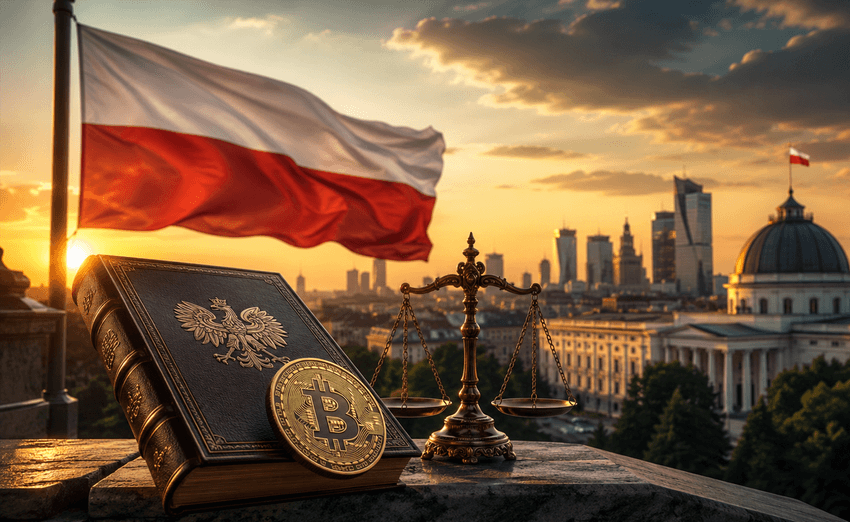

Poland Finally Advances MiCA Framework
Poland’s Sejm approved the government-backed legislation on Friday, moving the country closer to fully implementing the European Union’s Markets in Crypto-Assets Regulation, better known as MiCA.
The law is designed to create a formal legal framework for crypto exchanges and digital asset firms operating inside Poland and across the EU market.
The timing is critical because Poland faces a July deadline to adopt MiCA rules. Without implementation, local crypto firms risk losing authorization to legally offer digital asset services throughout the European Union.
Officials from Poland’s financial watchdog had previously warned lawmakers that further delays could damage the country’s crypto industry and create uncertainty for exchanges, brokers, and investors.
The vote marks a major breakthrough after months of political disputes over how aggressively Poland should regulate the crypto sector.
Political Divisions Nearly Derailed the Bill
The legislation faced heavy resistance inside Poland’s political system before finally advancing.
Several competing crypto proposals were introduced earlier this month by different political factions, including plans backed by President Karol Nawrocki, the Poland 2050 party, and the Confederation party.
At one point, lawmakers from the Law and Justice party even introduced a proposal seeking a complete ban on cryptoasset activity inside Poland.
Parliamentary Speaker Włodzimierz Czarzasty later stated that the proposed crypto ban would only be considered after work on the main regulatory framework was completed.
The disagreements highlighted deep divisions within Poland over whether crypto should be treated as a financial innovation opportunity or as a high-risk sector requiring extremely strict oversight.
Zondacrypto Investigation Overshadows the Industry
The approval of the MiCA bill comes at the same time that prosecutors continue expanding their investigation into Zondacrypto, one of Poland’s largest crypto exchanges.
According to reports, thousands of customers remain unable to withdraw funds from the platform, while authorities estimate losses may have surpassed 350 million zlotys - roughly $96 million.
The growing scandal has intensified political tensions across Warsaw, especially after Prime Minister Donald Tusk publicly linked the exchange to Russian criminal organizations and intelligence-connected networks.
Earlier this month, Tusk reportedly told government officials that Polish security services had identified Russian mafia money connected to the exchange’s operations.
Those allegations transformed what initially appeared to be a financial investigation into a broader political and national security issue.
So far, authorities have not announced formal criminal charges against Zondacrypto executives or operators.
Earlier Crypto Bills Were Rejected
The battle over crypto regulation has already produced several failed legislative attempts.
President Nawrocki previously vetoed two earlier crypto bills backed by Tusk’s government, arguing the proposals imposed excessive burdens on crypto companies and could push businesses to relocate outside Poland.
Even the latest debates reflected continued disagreement over how strict the final framework should become.
Nawrocki’s own alternative proposal reportedly mirrored much of the government-backed legislation but proposed lower penalties for regulatory violations.
Under the newly approved bill, companies obstructing inspections by regulators could face fines of up to 25 million zlotys. Nawrocki’s version would have capped those penalties at 20 million zlotys instead.
The dispute underscored how divided Poland’s political leadership remains on balancing consumer protection with maintaining competitiveness inside Europe’s growing crypto market.
Europe Continues Tightening Crypto Oversight
MiCA represents the European Union’s first comprehensive regulatory framework for digital assets.
The rules establish licensing standards, reserve requirements, consumer protections, and operational oversight for crypto firms across EU member states.
European regulators argue the framework is necessary after years of exchange collapses, fraud scandals, and market instability that damaged investor confidence.
Supporters believe unified regulation could attract larger institutional investment into Europe’s digital asset sector while creating more legal certainty for businesses.
Critics, however, warn that stricter compliance requirements may increase operational costs and drive smaller crypto firms toward jurisdictions with lighter regulation.
For Poland, the passage of the MiCA bill now shifts focus toward implementation - but the ongoing Zondacrypto investigation continues casting a shadow over the country’s crypto market as regulators attempt to rebuild trust in digital asset oversight.


