

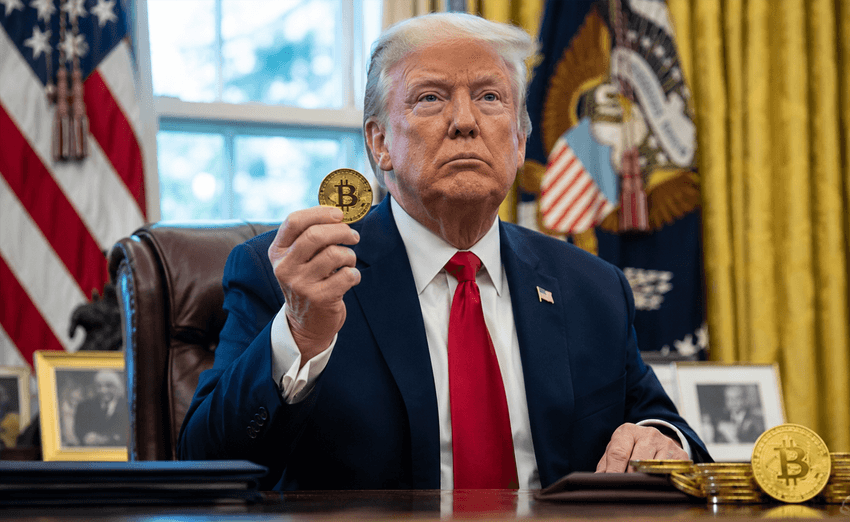

Trump Pushes for Permanent Crypto Market Structure Law
US President Donald Trump pledged Wednesday to establish a long-term regulatory framework for the crypto industry that would survive future political changes in Washington.
In a post shared on Truth Social, Trump criticized former U.S. Securities and Exchange Commission Chair Gary Gensler and what he described as the “anti-crypto army” for driving innovation and digital asset activity outside the United States.

CLARITY Act Remains Center of US Crypto Debate
Trump’s comments arrive as lawmakers continue debating the CLARITY Act, one of the most important crypto market structure bills currently moving through Congress.
The legislation recently advanced through the Senate Banking Committee after months of delays tied to disagreements over stablecoin regulations, banking restrictions, and decentralized finance oversight.
If ultimately passed into law, the bill would establish a comprehensive framework for regulating digital assets inside the United States.
The legislation is widely viewed as a major attempt to clarify which agencies oversee crypto markets and how digital assets should legally operate within the US financial system.
Democrats Still Divided Over Crypto Legislation
Despite recent progress, analysts continue warning that the CLARITY Act faces significant political hurdles before becoming law.
The bill would likely require support from at least seven Democratic senators to overcome Senate procedural barriers and secure final approval.
Benchmark analyst Mark Palmer recently noted that broader bipartisan support remains necessary for the legislation to move forward.
Meanwhile, researchers at TD Cowen warned this week that the crypto market structure bill could still fail to pass during 2026.
According to analysts, growing concerns surrounding Trump’s personal crypto ventures are making the legislation increasingly difficult for Democrats to support publicly.
Trump’s Crypto Ties Become Political Flashpoint
Several lawmakers have raised concerns over potential conflicts of interest involving Trump and his family’s growing involvement in the crypto sector.
The Trump family has backed multiple digital asset projects, including World Liberty Financial, alongside ventures connected to prediction markets and meme coin activity.
Those business ties have become a major point of contention during negotiations over crypto legislation.
Democratic Senator Ruben Gallego, who voted to advance the CLARITY Act earlier this month, warned he could oppose the bill on the Senate floor if stronger ethics provisions are not included.
Gallego specifically pointed to unresolved concerns involving Trump’s crypto-related business activities.
US Crypto Policy Shifting Rapidly
The broader political landscape around crypto in Washington has changed dramatically over the past year.
After years of aggressive enforcement actions and regulatory uncertainty under the previous administration, several lawmakers are now openly competing to position the United States as a global crypto hub.
Trump has increasingly embraced the digital asset industry throughout his 2024 and 2025 political campaigns, repeatedly promising to protect Bitcoin miners, stablecoin issuers, and blockchain companies operating inside the country.
The former president has also framed crypto regulation as part of a broader economic competition with Europe and Asia.
Industry Watching Senate Vote Closely
For the crypto industry, the fate of the CLARITY Act could become one of the most important regulatory moments in years.
Supporters argue that clear rules would encourage innovation, attract institutional investment, and prevent companies from relocating overseas due to regulatory uncertainty.
Critics, however, warn that the legislation still leaves unresolved questions around ethics, banking access, and decentralized finance oversight.
With Congress becoming increasingly divided over the issue, the coming Senate negotiations are expected to determine whether the United States finally establishes a long-term legal framework for crypto markets or continues operating under fragmented regulation.


