

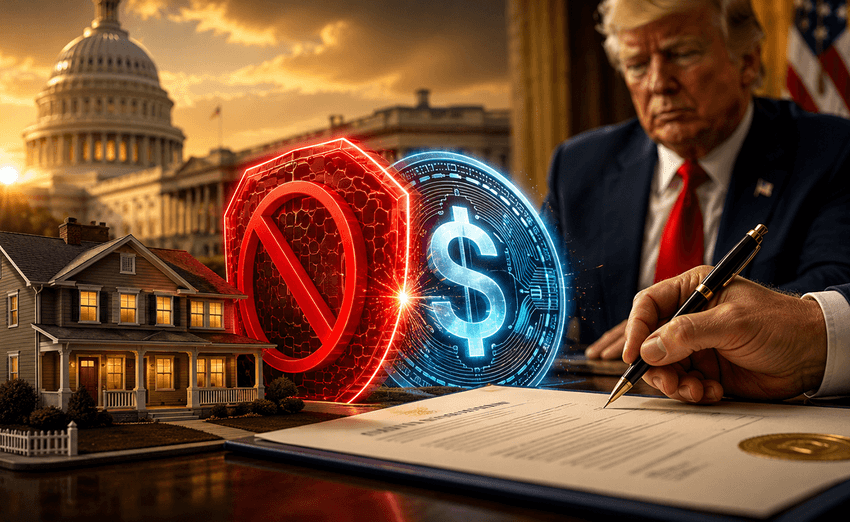

The U.S. House of Representatives has passed the 21st Century ROAD to Housing Act, clearing the final congressional hurdle before the legislation reaches President Donald Trump’s desk for signature.
The bill passed the House by a decisive 358-32 vote, just one day after receiving overwhelming approval in the Senate. While the legislation primarily focuses on improving housing affordability and increasing housing supply across the United States, it also includes one of the most significant anti-CBDC measures approved by Congress to date.
The rapid movement of the bill followed months of negotiations and delays before lawmakers from both chambers released a revised version that secured broad bipartisan support.
CBDC Ban Included Until 2030
One of the most closely watched provisions within the legislation prohibits the Federal Reserve from issuing, creating, or operating a Central Bank Digital Currency (CBDC) or any digital asset deemed substantially similar to a CBDC.
If signed into law, the restriction will remain in effect until December 31, 2030.
The provision represents another major victory for lawmakers and industry groups who argue that a government-issued digital currency could create privacy concerns, increase financial surveillance, and expand federal control over personal financial transactions.
The measure effectively prevents the Federal Reserve from launching a digital dollar during the remainder of President Trump’s current term and beyond.
Housing Affordability Remains Core Focus
Although the anti-CBDC language has attracted significant attention from the crypto industry, the primary goal of the legislation remains housing reform.
The 21st Century ROAD to Housing Act seeks to address rising housing costs by encouraging new housing development and limiting practices that lawmakers believe contribute to affordability challenges.
Supporters argue the bill will help increase housing inventory, improve accessibility for first-time homebuyers, and reduce barriers preventing Americans from achieving homeownership. Senate Banking Committee Chairman Tim Scott praised the legislation after its passag

Trump Administration Continues Anti-CBDC Position
The legislation aligns closely with the Trump administration’s broader stance on digital currencies. President Trump has repeatedly voiced opposition to a U.S. CBDC, arguing that it could threaten financial freedom and individual privacy. His administration has instead focused on promoting private-sector innovation within the digital asset industry.
Last month, Treasury Secretary Scott Bessent reinforced that position, stating that a U.S. central bank digital currency is “off the table.”
Rather than pursuing a digital dollar, the administration has prioritized advancing crypto-focused legislation such as the Clarity Act, which aims to establish a comprehensive regulatory framework for digital assets.
Crypto Industry Scores Another Legislative Win
The inclusion of anti-CBDC language in a major bipartisan bill highlights the growing influence of digital asset policy discussions in Washington.
While debates over stablecoins, market structure legislation, and crypto taxation continue, opposition to a government-issued digital currency has become one of the few areas where many crypto advocates and lawmakers share common ground.
With congressional approval secured and President Trump expected to support the measure, the United States appears set to formally halt any federal CBDC development efforts for at least the next several years.


