

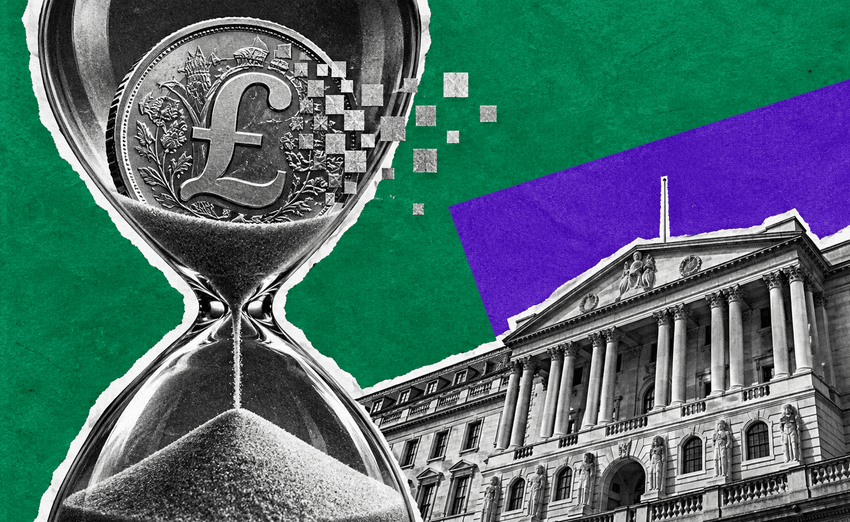

The Bank of England sees no immediate need to introduce a digital pound, as the United Kingdom approaches a decision on whether to develop its own central bank digital currency (CBDC).
Deputy Governor Sarah Breeden has emphasized that rapid innovation in private digital payments could address many of the problems a state-issued digital currency was originally intended to solve.
According to Breeden, commercial stablecoins and tokenized bank deposits may provide practical alternatives without requiring the central bank to immediately launch a new form of money.
The position reflects growing interest in privately issued digital payment instruments, particularly those denominated in British pounds.
However, the Bank has not formally abandoned the digital pound project, and its final decision remains scheduled for 2026.
UK Prioritizes Sterling Stablecoin Development
The central bank is also focused on encouraging sterling-denominated stablecoins to reduce reliance on dollar-backed digital assets.
As of late 2025, sterling stablecoins represented less than $6 million of a global stablecoin market worth approximately $308 billion, highlighting the dominance of U.S. dollar-pegged tokens.
British authorities want domestic payment providers to develop competitive alternatives that businesses and consumers can use for digital transactions.
The Bank of England has already made progress toward establishing a regulatory framework for these assets.
On June 22, 2026, it published a policy statement and draft rules covering systemic sterling stablecoin issuers.
The proposed framework replaced earlier holding limits with a temporary £40 billion issuance guardrail per stablecoin.
Issuers would be permitted to hold up to 70% of their backing reserves in short-term UK government debt, while the remaining 30% would be maintained as unremunerated deposits at the central bank.
The rules also require redemptions within 24 hours and prohibit issuers from paying interest directly on stablecoin holdings.
Digital Pound Decision Expected Before Year-End
Despite the focus on private digital money, the digital pound remains in its design phase, which is expected to conclude during 2026.
In a March 4 progress update, the Bank of England confirmed that it was preparing a detailed blueprint outlining how a potential digital pound could operate.
The blueprint will incorporate findings from technical experiments, industry consultations and discussions with civil society.
The Bank and HM Treasury will jointly assess whether proceeding with the project is necessary, considering developments in the wider payments market.
Their decision is expected to be announced alongside the blueprint and final assessment before the end of the year.
Breeden's comments indicate a cautious approach, but they do not establish whether the central bank will ultimately approve or reject the project.
Digital Pound Lab Continues Testing Blockchain Payments
Meanwhile, the Bank of England continues exploring potential applications through its Digital Pound Lab.
One experiment involves Polygon Labs, NOBO Finance and Dun & Bradstreet, focusing on cross-border trade finance.
The project examines whether stablecoins and a simulated digital pound can work together to settle different stages of an international commercial transaction.
The objective is to reduce payment delays affecting smaller exporters and importers, which can sometimes wait several days for funds after shipping goods.
The experiment uses simulated digital money rather than real customer funds, allowing participants to test settlement processes without introducing a live CBDC.
Applications for the laboratory's second phase closed in March 2026.
The Bank has emphasized that participation in these experiments does not represent a commitment to issuing a digital pound.
Private Digital Money Could Shape UK's Payment Future
The Bank of England's latest position highlights a broader question about whether central banks need to issue digital currencies when regulated private alternatives are developing rapidly.
Stablecoins and tokenized deposits could potentially deliver faster payments, programmable transactions and improved cross-border settlement.
However, regulators must also consider financial stability, consumer protection and the reliability of privately issued money.
For the United Kingdom, the 2026 decision will determine whether the digital pound moves beyond research and design.
Until then, the Bank is continuing its technical work while placing increasing emphasis on regulated sterling stablecoins and other private-sector payment innovations.


