

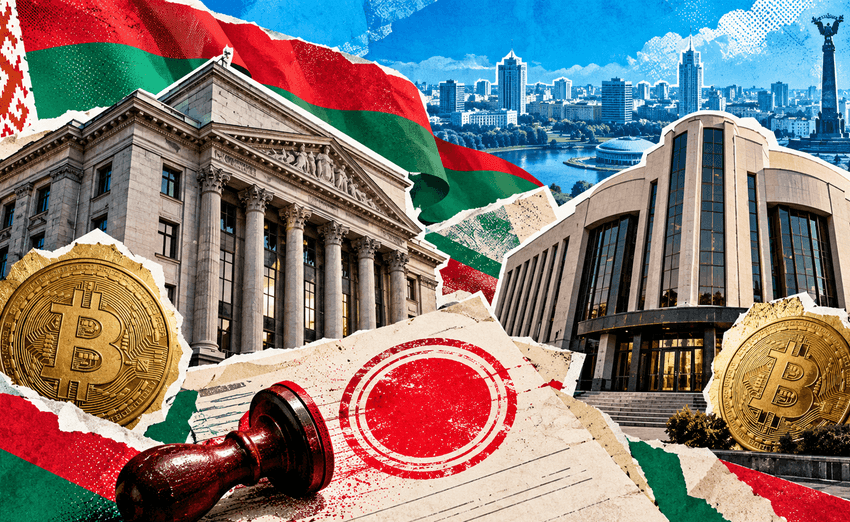

Belarus has formally registered the first two crypto banks in the country's history, marking a major step in its attempt to integrate cryptocurrency services with the traditional financial system.
The two organizations were approved as residents of the Belarus Hi-Tech Park (HTP) during a September 28 meeting of its Supervisory Board chaired by Prime Minister Aleksandr Turchin. The registrations follow months of regulatory work establishing a framework specifically for crypto banks.
Turchin said authorities had spent more than six months preparing the necessary legislation and infrastructure, following a presidential decree on crypto banking that entered into force in July 2026.

The move represents the first practical application of Belarus's newly created crypto banking regime.
Six Months of Regulatory Preparation
The framework originated with Presidential Decree No. 19, signed earlier in 2026 to establish the legal basis for crypto banks. The decree created a model under which qualifying institutions can combine traditional banking activities with operations involving digital tokens.
Implementation required additional rules from the government, National Bank of Belarus and HTP Supervisory Board, covering areas including permitted activities, financial requirements, reporting and operational standards.
Under the framework, a crypto bank is structured as a joint-stock company that receives HTP resident status and is subsequently entered into a special register maintained by the National Bank.
The system therefore brings crypto banks under two regulatory structures rather than allowing them to operate solely as technology companies or conventional financial institutions.
Registration Is Only the First Step
The September approval does not mean the two organizations can immediately begin offering full crypto banking services.
HTP registration is the first stage of a two-step authorization process. Each institution must now obtain accreditation from the National Bank before it can operate as a crypto bank.
Anna Ryabova, head of the secretariat of the HTP Supervisory Board, emphasized that the process is only beginning.
She explained that institutions first become HTP residents before undergoing National Bank accreditation.
Officials have not publicly identified the two institutions in the announcement, meaning their names and the exact services they intend to launch remain unclear.
Crypto Banks Face Banking-Level Oversight
Belarusian regulators say they have already established the main practical requirements governing the new institutions.
Dmitry Kalechits, First Deputy Head of the HTP Supervisory Board Secretariat, said the authorities have addressed requirements covering operations, reporting and other major aspects of crypto bank activity.
According to officials, the organizations pursuing crypto bank status have assembled professional teams and technological infrastructure while undergoing technical and legal audits.
The dual-approval structure means applicants effectively face two checkpoints: the HTP evaluates their participation within Belarus's digital economy framework, while the National Bank applies financial-sector supervision before they can begin operating.
This model distinguishes crypto banks from ordinary crypto exchanges by placing them closer to the regulated banking system.
Belarus Wants to Merge Crypto and Traditional Finance
Belarusian officials have presented the framework as a way to connect traditional banking services with digital asset operations, rather than maintaining separate financial ecosystems.
Kalechits said the regulatory model could increase the technological sophistication of financial services, strengthen trust in institutions and help attract investment into Belarus.
The government also expects crypto banks to broaden the financial instruments available to individuals and businesses while creating additional options for managing savings and accessing digital financial services.
The September registrations are therefore significant, but they do not represent the final regulatory approval.
The next milestone will come when the National Bank completes its accreditation process and adds qualifying institutions to its crypto bank register. Until then, the precise products, launch dates and operational scope of Belarus's first crypto banks remain uncertain.
If accreditation is granted, Belarus will move from establishing a crypto banking framework on paper to testing how regulated crypto and conventional banking services can operate within the same institutional structure.


