

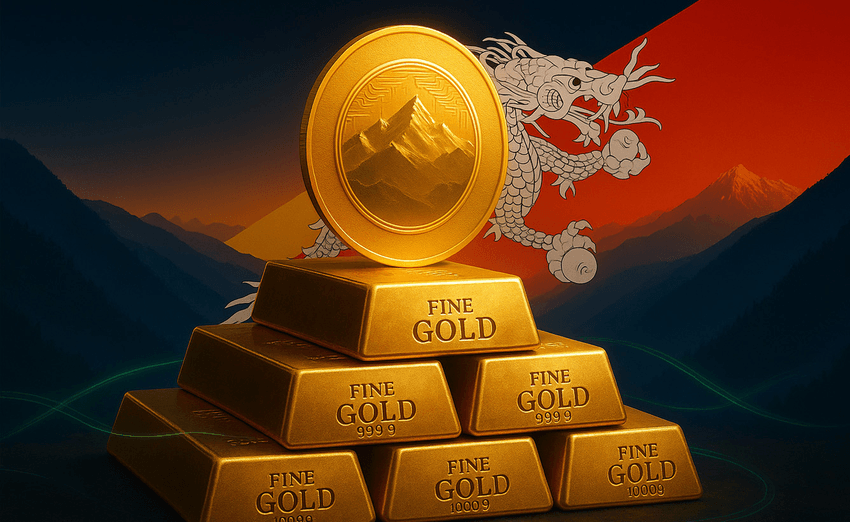

Bhutan Introduces TER, a Sovereign-Backed Gold Token
Bhutan has taken another bold step into the digital asset space with the launch of a sovereign gold-backed token called TER, announced by Gelephu Mindfulness City (GMC) - a special administrative zone designed to modernize the country’s economy. The token is backed by physical gold reserves and issued on the Solana blockchain, marking one of the rare cases of a government-backed real-world asset (RWA) token.
The gold reserves supporting TER will be custodied by DK Bank, a digital asset bank regulated by the Bhutanese government. The tokenization process is being handled by Matrixdock, a platform specializing in bringing real-world assets on-chain. According to GMC, the initiative is structured to mirror the security and trust associated with purchasing gold through traditional financial institutions.
A Hedge Against Inflation in a Digital Economy
Bhutan’s leadership framed the TER launch as a strategic response to currency inflation risks in the digital age. By backing the token with gold, the government aims to provide a stable, transparent store of value while leveraging blockchain technology to modernize access and settlement.
Initially, TER tokens will be held in custody at DK Bank, with broader access expected in later phases. While specific rollout timelines were not disclosed, officials emphasized that the system prioritizes security, regulatory oversight, and familiarity for investors.
Bhutan’s Expanding Crypto and Blockchain Strategy
The gold-backed token is not an isolated move. Bhutan has steadily embraced crypto and blockchain infrastructure as part of a broader national modernization strategy. Since 2019, the country has been mining Bitcoin using hydroelectric power, turning surplus renewable energy into digital reserves.
According to blockchain intelligence data, Bhutan currently holds nearly 6,000 BTC, valued at over $540 million, placing it among the more discreet but significant sovereign Bitcoin holders globally.
Earlier this year, GMC also announced a digital asset reserve that includes Bitcoin, Ether, and BNB, later expanding to include smaller allocations to select altcoins and memecoins. These moves signal a long-term commitment to diversified digital reserves rather than speculative exposure.
Crypto Adoption Boosts Tourism and Payments
Bhutan’s crypto strategy extends beyond reserves and tokenization. In May, the government partnered with DK Bank and Binance Pay to enable crypto payments for tourists, covering hotels, tours, entrance fees, and transportation.
Today, over 1,000 businesses across Bhutan accept cryptocurrency payments, giving visitors access to seamless digital transactions in a country that has historically faced limitations in traditional payment infrastructure. Officials say the initiative has helped support the tourism sector, which struggled in recent years due to payment accessibility issues.
A Rare Sovereign Experiment in Real-World Asset Tokenization
By launching TER, Bhutan positions itself as one of the few nations actively experimenting with sovereign-backed RWAs on public blockchains. The combination of gold backing, regulated custody, renewable-energy Bitcoin mining, and real-world crypto payments sets Bhutan apart from larger economies still debating similar frameworks.
If successful, the TER token could serve as a model for small nations seeking monetary resilience, digital innovation, and financial modernization without sacrificing sovereignty.


