

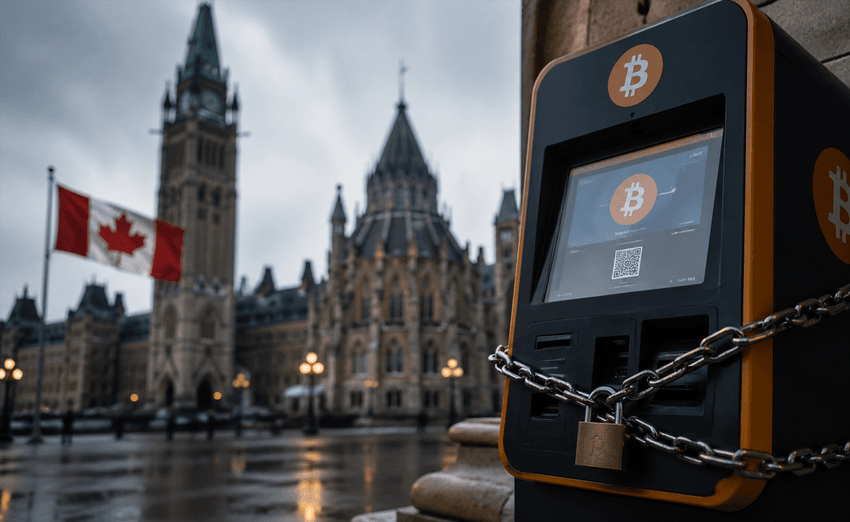

Government Moves Toward Nationwide Ban
Canada is considering a full ban on cryptocurrency ATMs, as part of a broader crackdown on fraud and money laundering tied to digital assets.
The proposal was outlined in the government’s latest economic update, where officials described crypto kiosks as a “primary method” used by scammers to exploit victims and move illicit funds.
While no exact timeline has been provided yet, the direction is clear: regulators want to remove what they see as one of the weakest points in the crypto ecosystem.
Why Crypto ATMs Are Being Targeted
Crypto ATMs were originally designed to make buying digital assets easier, especially for users without access to exchanges or banking infrastructure.
But regulators now argue that the same convenience has made them a preferred tool for fraudsters.
Victims are often instructed to deposit cash into these machines and send crypto directly to scammers, making recovery nearly impossible. The lack of strong identity checks and real-time monitoring has only increased the risk.
With around 4,000 machines operating across Canada, the country has one of the highest concentrations globally-yet the sector still lacks dedicated regulation.
Not a Ban on Crypto Itself
Despite the proposed crackdown, Canada is not banning crypto access entirely.
Users will still be able to purchase digital assets through licensed money services businesses, including physical locations that follow stricter compliance rules.
This reinforces a pattern in Canada’s approach: limit high-risk entry points while allowing regulated channels to operate.
A Global Crackdown Is Already Underway
Canada isn’t acting in isolation.
Governments worldwide are tightening rules around crypto ATMs as fraud cases continue to rise. Several jurisdictions have already taken action, including full bans or stricter liability laws targeting both operators and businesses hosting the machines.
In the United States, data from the Federal Bureau of Investigation highlights the scale of the issue. Authorities recorded over 13,000 complaints in 2025, with losses reaching $389 million, a sharp increase from the previous year.
These numbers have fueled growing concern that crypto ATMs are becoming a systemic vulnerability in the digital asset space.
Fraud, Regulation, and the Future of Access
The proposed ban reflects a broader shift in how governments are approaching crypto adoption.
Instead of outright banning digital assets, regulators are increasingly targeting the infrastructure and access points that are most vulnerable to abuse.
Crypto ATMs fall directly into that category, sitting at the intersection of cash, anonymity, and digital transfers - a combination that makes them difficult to monitor and easy to exploit.


