

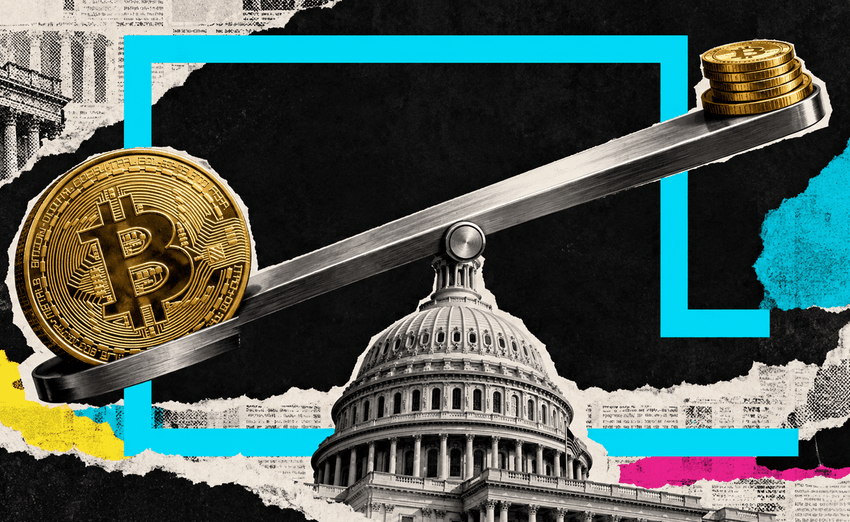

The U.S. Commodity Futures Trading Commission is moving toward a new federal framework for retail cryptocurrency trading involving leverage, margin or financing, as regulators pursue crypto market rules under their existing authority.
On October 5, the CFTC published an Advance Notice of Proposed Rulemaking, seeking public feedback before drafting formal regulations. The initiative would establish two interconnected frameworks known as Regulation Crypto Asset Transactions, or Regulation CTX, and Regulation Crypto Asset Markets, or Regulation CAM.
The public will have 60 days to submit comments after the notice is published in the Federal Register.
CFTC Chairman Michael Selig described the initiative as an effort to bring crypto transactions into a consistent national regulatory structure.

The proposal comes as the CFTC and SEC increasingly use their existing statutory powers to establish crypto rules while broader congressional market-structure legislation remains unresolved.
🚨 BREAKING NEWS 📺 pic.twitter.com/hbDcjjI69B
— Mike Selig (@ChairmanSelig) October 5, 2026
🚨 BREAKING NEWS 📺 pic.twitter.com/hbDcjjI69B
— Mike Selig (@ChairmanSelig) October 5, 2026
Leverage Could Trigger Federal Oversight
The CFTC's approach relies heavily on Section 2(c)(2)(D) of the Commodity Exchange Act, which was added through the Dodd-Frank Act.
The provision generally treats certain retail commodity transactions involving leverage, margin or financing similarly to futures transactions, subjecting them to specified CFTC requirements unless an exemption applies.
Regulation CTX would establish crypto-specific rules around these transactions.
One of the most important questions involves when cryptocurrency has been “actually delivered” to a customer. Transactions meeting the statutory actual-delivery exception can fall outside some requirements that otherwise apply to leveraged retail commodity transactions.
The CFTC withdrew its previous 2020 digital asset delivery guidance in December 2025, saying market developments had made parts of the framework outdated.
The new proposal asks how actual delivery should work in modern crypto markets, including when assets remain within an exchange's internal custody system.
Self-Custody Could Become an Important Test
The distinction between exchange custody and self-custody could become particularly significant.
Under the framework being considered, transferring purchased crypto into a wallet controlled by the customer could provide a clearer route toward satisfying actual-delivery requirements. The CFTC is seeking feedback on the level of control necessary and how custody arrangements should be treated.
The agency also preliminarily views transactions conducted through certain onchain protocols as generally capable of producing actual delivery, because assets can move directly to wallets controlled by users.
However, these positions remain part of an early-stage rulemaking process rather than finalized requirements.
The agency is also examining how concepts such as staking, governance rights, liens and other arrangements should affect the determination of whether customers genuinely control their purchased assets.
Regulation CAM Would Create a Federal Exchange Path
The second component, Regulation CAM, would establish a tailored federal framework for crypto asset markets handling covered retail transactions.
The concept would build on the CFTC's existing designated contract market regime while adapting requirements for cryptocurrency trading.
Under the framework described by the agency, regulated intermediaries could play a central role in financing leveraged transactions, while applicable entities would remain subject to requirements involving anti-money laundering controls, market surveillance and customer protection.
The CFTC is also considering additional safeguards, including proof-of-reserves requirements and standards designed to address crypto assets considered particularly vulnerable to manipulation.
Importantly, the proposed approach does not automatically federalize every U.S. spot crypto exchange. Platforms that avoid covered leveraged or financed transactions could potentially continue operating primarily under state-level regulatory frameworks, depending on their activities.
CFTC Shifts From Enforcement Toward Rulemaking
The proposal also represents a broader change in the agency's regulatory strategy.
Selig has criticized the previous approach taken by federal regulators, arguing that enforcement actions were frequently used instead of developing dedicated rules for crypto businesses.
In remarks accompanying the latest initiative, he said the CFTC and SEC possess sufficient existing authority to begin establishing a federal crypto market structure even without new legislation from Congress.
The SEC is pursuing its own parallel rulemaking initiatives, creating the possibility that the two agencies could establish significant portions of the U.S. crypto regulatory framework through administrative rules.
For now, however, Regulation CTX and Regulation CAM remain proposals for discussion rather than final regulations.
The upcoming comment period will allow exchanges, investors, brokers, DeFi developers and other market participants to weigh in on issues ranging from leverage and custody to actual delivery and proof of reserves.
The eventual rules could determine whether leveraged retail crypto trading gains a clearer federally regulated path in the United States, while leaving some non-leveraged spot activity under existing state oversight.


