

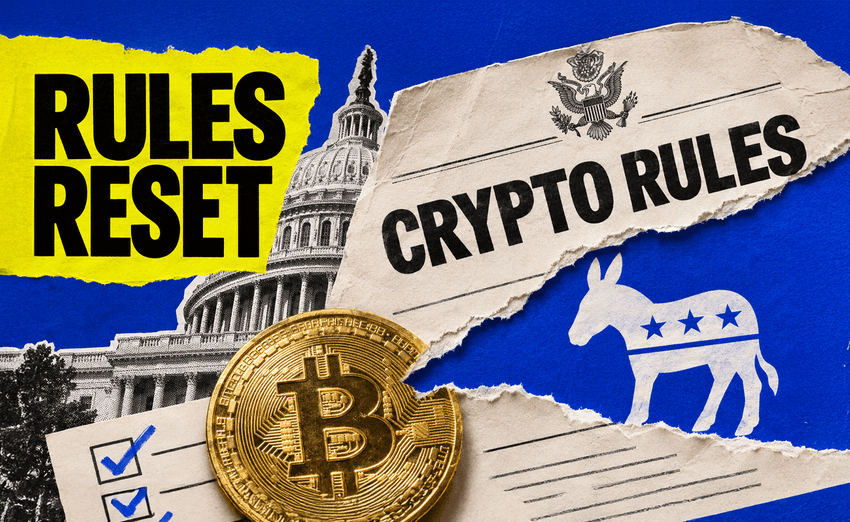

Democrats have secured control of both the US Senate and House of Representatives following the November 3, 2026, midterm elections, potentially reshaping cryptocurrency regulation.
The change in congressional leadership creates new uncertainty for digital asset companies, particularly those seeking clearer federal rules for exchanges, stablecoins and decentralized finance.
According to industry advocacy organization The Digital Chamber (TDC), the election results could significantly change Washington's approach to cryptocurrency and artificial intelligence regulation.
Democratic lawmakers are expected to emphasize consumer protection, financial transparency and stricter oversight of emerging technologies.
However, the direction of future legislation will depend on negotiations between lawmakers from both parties.
CLARITY Act Faces Expiration After Senate Defeat
The CLARITY Act, a proposed framework for regulating US cryptocurrency markets, faces an uncertain future following its failure to advance in the Senate.
The legislation previously failed to reach the Senate's 60-vote procedural threshold, with a reported 49–50 vote.
Unless lawmakers revive the proposal before the current congressional session ends, the bill will expire on January 3, 2027, when the 119th Congress concludes.
Any subsequent attempt to establish a federal cryptocurrency market structure framework would require reintroducing legislation and negotiating fresh political support.
Because most Senate legislation requires 60 votes to overcome a filibuster, Democratic control alone would not guarantee passage.
A revised proposal could include stronger compliance obligations, additional investor protections and more detailed requirements for decentralized finance platforms.
Elizabeth Warren Could Lead Senate Banking Committee
Senator Elizabeth Warren is expected to become a leading figure in congressional financial oversight, potentially chairing the Senate Banking Committee.
The Digital Chamber anticipates greater scrutiny of cryptocurrency exchanges, banking relationships and digital asset compliance.
In the House, Democrats could prioritize stablecoin reserve requirements, consumer disclosures and anti-money laundering protections.
These changes could increase compliance obligations for cryptocurrency companies, although no new rules have been enacted following the election.
Importantly, the SEC and CFTC remain part of the executive branch, meaning congressional control does not automatically change federal regulatory leadership.
AI and Blockchain Companies Face Greater Scrutiny
Artificial intelligence companies could also face additional congressional oversight, particularly concerning data privacy, national security and infrastructure development.
The Digital Chamber expects lawmakers to consider stronger transparency requirements and formal risk management standards for advanced AI systems.
For cryptocurrency businesses, the regulatory debate extends beyond exchanges to decentralized finance, stablecoin issuers and blockchain infrastructure providers.
However, stricter oversight remains a policy possibility rather than an established outcome.
Industry groups continue advocating for rules that protect consumers while allowing digital asset companies to operate in the United States.
Crypto Industry Looks Toward 2027
The cryptocurrency industry's next major legislative opportunity may come with the 120th Congress, which begins on January 3, 2027.
Lawmakers could still revisit the CLARITY Act during the remaining weeks of the current congressional session.
Otherwise, negotiations would need to restart under Democratic congressional leadership.
Even with majorities in both chambers, Democrats would generally need Republican support to overcome Senate procedural hurdles, while President Trump would retain veto authority.
For now, US cryptocurrency regulation faces another period of uncertainty, with the future of market structure legislation depending on bipartisan negotiations.
The central question is whether lawmakers can establish clearer digital asset rules while addressing concerns about investor protection, financial stability and technological innovation.


