

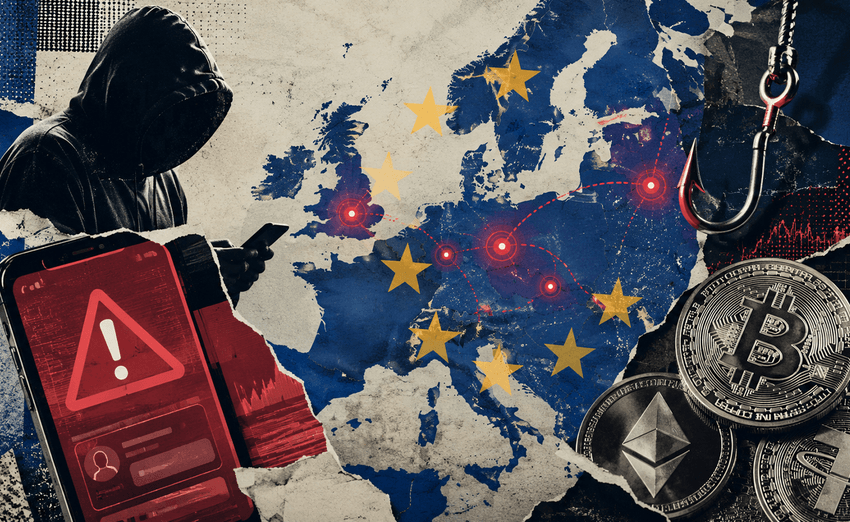

European regulators are warning cryptocurrency investors about an increase in scams following the end of the Markets in Crypto-Assets (MiCA) transition period. Criminals are reportedly impersonating regulators and licensed exchanges as thousands of users search for compliant platforms or move their digital assets.
The MiCA transition period ended on July 1, meaning cryptocurrency companies without authorization as Crypto-Asset Service Providers (CASPs) can no longer legally provide services to customers across the EU and European Economic Area.
That transition has created ideal conditions for phishing. Users legitimately expect account migration notices, identity verification requests, and instructions for moving crypto, giving scammers an opportunity to imitate genuine communications.
🛑 #Fraud alert: scammers are impersonating #ESMA and exploiting the end of the #MiCA transition!
— ESMA - EU Securities Markets Regulator 🇪🇺 (@ESMAComms) July 9, 2026
❌ Don't engage with suspicious messages
📤 Report scams to your national authorities
🛡️ Verify sources.
Official ESMA emails → @esma.europa.eu
Website → https://t.co/TrxPfYfR1Y pic.twitter.com/MaMIUoyO4c
🛑 #Fraud alert: scammers are impersonating #ESMA and exploiting the end of the #MiCA transition!
— ESMA - EU Securities Markets Regulator 🇪🇺 (@ESMAComms) July 9, 2026
❌ Don't engage with suspicious messages
📤 Report scams to your national authorities
🛡️ Verify sources.
Official ESMA emails → @esma.europa.eu
Website → https://t.co/TrxPfYfR1Y pic.twitter.com/MaMIUoyO4c
Fake Regulators Target Crypto Investors
Authorities in France, the Netherlands, and across the European Union have reported increased fraudulent activity surrounding the MiCA transition.
Stéphane Pontoizeau, head of market intermediaries and infrastructure supervision at France's Autorité des Marchés Financiers (AMF), described the regulatory shift as:

French authorities have identified cases where criminals impersonated AMF officials and directed victims toward fraudulent websites designed to resemble legitimate government services.
The European Securities and Markets Authority (ESMA) has issued similar warnings after scammers began using its name, logo, and branding in phishing campaigns.
ESMA stressed that legitimate communications come from addresses ending in @esma.europa.eu and that regulators will never ask investors to transfer cryptocurrency for compliance purposes.
Social Engineering Replaces Technical Hacks
Many of the attacks rely primarily on psychological manipulation rather than sophisticated technical exploits.
Fraudsters reproduce government logos, use regulatory terminology, and create urgency by warning victims that they could lose access to accounts or violate new regulations unless they act immediately.
Security specialists recommend that investors independently visit official regulator or exchange websites rather than clicking links contained in unexpected emails or messages. Users should also verify whether a platform appears on official MiCA registers before transferring assets.
The strategy is particularly effective during regulatory transitions because legitimate companies may simultaneously be requesting similar actions from their customers.
Thousands of Crypto Firms Could Leave Europe
The scale of Europe's crypto market restructuring explains why scammers are concentrating on displaced customers.
As of July 31, the MiCA register contained approximately 338 authorized CASPs, up from around 194 in May, representing growth of roughly 74% within three months.
However, that remains significantly below the more than 3,000 cryptocurrency businesses previously operating under national registrations.
According to estimates cited by VASPnet, more than 1,700 companies could eventually stop serving EU customers as the regulatory transition continues.
The result is a large-scale migration toward a smaller number of authorized platforms, creating repeated opportunities for criminals to impersonate exchanges and redirect users toward fraudulent websites or wallets.
MiCA Highlights Short-Term Regulatory Risks
Crypto impersonation scams existed long before MiCA, but major regulatory changes can temporarily make them more effective.
Chainalysis estimated that cryptocurrency scams and fraud generated approximately $17 billion in illicit revenue during 2025, with artificial intelligence increasingly helping criminals produce convincing phishing emails, fake customer-support interactions, and fraudulent websites.
MiCA is ultimately intended to strengthen consumer protection and establish consistent crypto rules across Europe, but regulators are emphasizing that investors need to remain particularly cautious during the transition.
As customers migrate between platforms, verifying regulatory status, checking website addresses independently, and refusing unexpected requests to transfer cryptocurrency can help prevent scammers from exploiting the confusion created by Europe's changing crypto landscape.


