


Bitcoin Becomes Part of the Homebuying Process
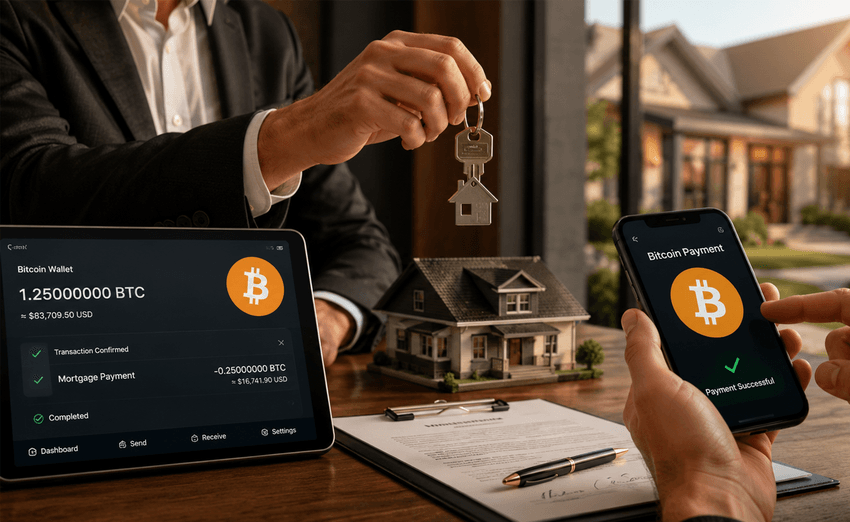
Crypto adoption in traditional finance reached a new milestone this week as Coinbase announced the completion of the first-ever Fannie Mae-backed mortgage secured by Bitcoin collateral.
The historic transaction involved a Michigan couple who worked with digital mortgage lender Better to purchase a home without selling their Bitcoin holdings.
Instead of converting their crypto into cash for a down payment, the borrowers pledged Bitcoin as collateral, allowing them to secure financing while maintaining exposure to potential future gains in the asset.
The transaction marks a significant breakthrough for crypto investors who have long faced challenges using digital assets within the traditional housing finance system.
Coinbase Expands Crypto-Backed Home Loans
The product was initially unveiled earlier this year and is expected to become available to qualified borrowers nationwide over the coming months.
Coinbase said the program will initially support both Bitcoin and Circle’s USDC stablecoin, creating new options for crypto holders seeking to enter the housing market.
According to Coinbase Head of Consumer and Platform Partnerships Mark Troianovski, the initiative helps bridge the gap between digital asset wealth and traditional financial opportunities.

The company believes the offering could become increasingly attractive as crypto ownership continues to grow across the United States.
How the Mortgage Structure Works
The arrangement differs significantly from traditional home loans.
Borrowers effectively receive two separate loans.
The first is a standard mortgage that complies fully with Fannie Mae requirements and federal lending guidelines.
The second loan is tied to the borrower's cryptocurrency holdings and creates a secondary lien on the property.
For example, a borrower seeking a $100,000 down payment may be required to pledge approximately $250,000 worth of Bitcoin as collateral.
Unlike many crypto-backed lending products, Bitcoin price fluctuations do not automatically trigger liquidations.
However, Better states that it may liquidate pledged crypto assets if the borrower becomes significantly delinquent on mortgage payments, typically after a 60-day default period.
Avoiding Capital Gains Taxes
One of the biggest advantages highlighted by Coinbase is that borrowers can avoid selling their Bitcoin.
Traditionally, crypto investors needing cash for a home purchase would be forced to liquidate assets, potentially triggering substantial capital gains taxes while also sacrificing future upside if Bitcoin appreciates further.
The new structure allows investors to unlock value from their holdings while continuing to maintain ownership of their digital assets.
For long-term Bitcoin believers, that distinction could prove particularly attractive.
Regulatory Winds Begin to Shift
The mortgage industry has historically viewed cryptocurrency as too volatile to be considered a reliable asset for home financing.
That stance began to change after Federal Housing Finance Agency Director Bill Pulte encouraged government-backed mortgage institutions to better align with the growing digital asset sector.
The agency clarified that eligible crypto assets must be held through regulated centralized exchanges rather than self-custody wallets.
Historically, mortgage lenders primarily considered traditional assets such as cash, stocks, bonds, and retirement accounts when evaluating borrower finances.
The latest transaction signals a significant evolution in how lenders view digital assets.
Critics Still Warn of Risks
Not everyone supports integrating cryptocurrencies into the housing market.
Some lawmakers and financial regulators have expressed concerns that Bitcoin’s volatility could introduce additional risks into the mortgage system.
Earlier this year, Senator Elizabeth Warren criticized efforts to incorporate digital assets into federally backed housing finance programs.
She argued that expanding crypto exposure within the mortgage market could create unnecessary risks for both consumers and the broader financial system.
Supporters, however, argue that proper collateral requirements and risk controls can mitigate many of those concerns while giving millions of crypto holders access to new financial opportunities.
As adoption continues to grow, the first Bitcoin-backed mortgage may represent only the beginning of a broader convergence between digital assets and traditional real estate finance.


