

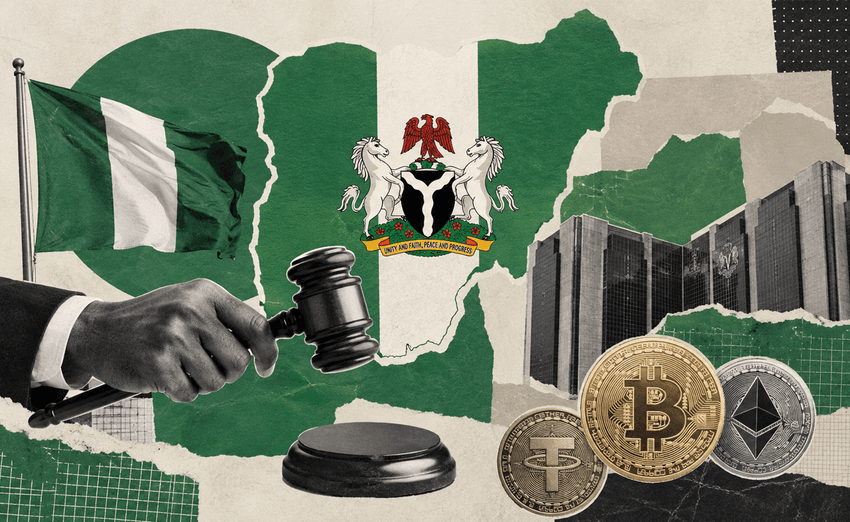

Nigeria has taken its biggest regulatory step toward governing digital assets with the launch of the Virtual Asset Council (VAC), a new body designed to coordinate cryptocurrency regulation across multiple government agencies. The reform, introduced through the "Presidential Executive Order on Virtual Assets Coordination, 2026" seeks to create a unified framework for one of Africa's largest and fastest-growing crypto markets.
Under the new structure, the Central Bank of Nigeria (CBN) will chair the council, while the Nigerian Revenue Service (NRS) and the Securities and Exchange Commission (SEC) will serve as vice-chairs. The council will also include representatives from the Nigerian Financial Intelligence Unit (NFIU) and the Office of the National Security Adviser (ONSA), bringing together financial, tax, and security authorities under a single coordination mechanism.
To support day-to-day operations, the government will establish a Virtual Assets Bureau within the central bank. The office will oversee market surveillance, information sharing, and inter-agency coordination through a unified technology platform.
Shared Regulatory Responsibilities
Rather than creating a completely new regulator, Nigeria has opted for a coordinated regulatory model. Existing government agencies will continue supervising different areas of the crypto industry based on the nature of the services being offered.
Under the framework, the SEC will regulate digital assets and activities classified as securities, while the Central Bank and other relevant authorities will oversee payment-related virtual assets, settlement systems, and custody services.
Officials say the new approach is intended to eliminate overlapping regulations, simplify compliance for crypto businesses, and strengthen enforcement against fraud and unlicensed operators. By clearly defining regulatory responsibilities, the government hopes to provide greater certainty for both domestic companies and international investors.
Sandbox and Tax Rules on the Way
The reform package also introduces new initiatives to encourage innovation while improving regulatory clarity. One of the key measures is the creation of a specialized regulatory sandbox, where blockchain and cryptocurrency companies will be able to test new products and services under regulatory supervision before entering the broader market.
At the same time, the Nigerian Revenue Service has been tasked with developing a dedicated tax framework for virtual assets. The objective is to clarify tax obligations for individuals and businesses while integrating the rapidly expanding crypto sector into the country's broader revenue system.
The government has instructed the Virtual Asset Council to prepare a unified implementation framework within 30 days. Following that process, authorities plan to publish a National White Paper on Virtual Assets, outlining Nigeria's long-term strategy for digital asset regulation and industry development.
Positioning Nigeria as Africa's Crypto Leader
The executive order represents Nigeria's most comprehensive cryptocurrency reform to date. After years of shifting regulatory approaches, policymakers are now seeking to balance innovation, investor protection, and financial stability through a coordinated national framework.
As Africa's largest cryptocurrency market, Nigeria has become a major center for digital asset adoption, with millions of users relying on cryptocurrencies for payments, savings, and cross-border transfers. The government hopes that a clearer regulatory environment will encourage institutional capital, fintech innovation, and responsible market growth while reducing fraud and improving oversight.
By bringing together the country's key financial, tax, and security agencies under the Virtual Asset Council, Nigeria is positioning itself to become one of Africa's leading jurisdictions for digital asset regulation and could provide a model for other emerging markets seeking to integrate cryptocurrencies into their financial systems.


