

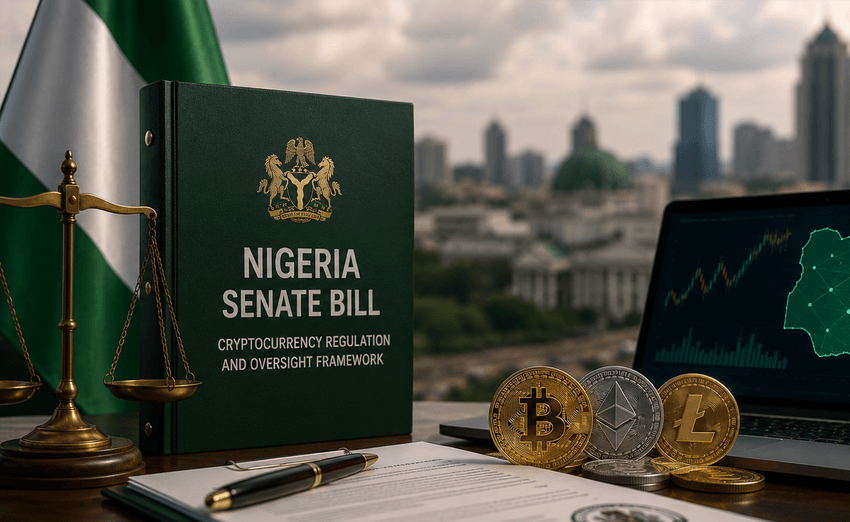

Nigeria has taken another significant step toward formal cryptocurrency regulation after the Senate approved a crypto bill through its second reading, sending the legislation to the Senate Committee on Capital Market for further review.
If eventually passed into law, the bill would introduce mandatory licensing requirements for crypto exchanges, stronger anti-money laundering (AML) measures, and enhanced investor protection rules, bringing Africa’s largest economy closer to establishing clear oversight for its rapidly expanding digital asset industry.
Senate Pushes for Greater Transparency in Crypto Markets
The legislation was advanced after a majority voice vote presided over by Deputy Senate President Barau Jibrin, with the committee now given four weeks to conduct public hearings before submitting its recommendations.
The proposal arrives as Nigeria remains one of the world's largest cryptocurrency adoption markets, with millions of citizens using Bitcoin and other digital assets for remittances, savings, and everyday transactions despite years of inconsistent government policies.
Senate Chief Whip Tahir Monguno, who sponsored the bill, argued that the absence of clear regulation has exposed users to unnecessary risks.

Lawmakers emphasized that transparent regulation could reduce fraud while allowing the industry to operate within a supervised financial system.
Lawmakers Say Nigeria Has Fallen Behind Regional Peers
Several senators expressed concern that Nigeria has lost valuable time while neighboring African countries developed clearer digital asset policies.
Senator Shuaib Salisu warned that without regulation, crypto activity would continue operating in opaque markets where criminal activity becomes harder to detect.
Meanwhile, Senator Oyelola Ashiru questioned why countries such as Kenya, South Africa, and Ghana have moved ahead of Nigeria in building digital asset frameworks, while Senator Adetokunbo Abiru urged lawmakers to ensure any new legislation aligns with existing financial regulations to avoid overlapping oversight.
Industry Leaders Criticize Years of Policy Reversals
The proposed legislation has been welcomed by many industry participants, although some believe Nigeria has already lost years of potential economic growth.
Rume Ophi, co-convener of Decentralised Nigeria and communications lead at VASPA, criticized previous government policies that restricted crypto adoption, arguing that regulators failed to understand the industry's potential.
Ophi also pointed to the 2021 banking restrictions on cryptocurrency transactions, saying they prevented Nigeria from capitalizing on its position as one of the world's largest crypto markets.
Despite the criticism, he acknowledged that recent policy changes under President Bola Tinubu's administration signal a more supportive approach toward digital assets and innovation.
Nigeria Seeks to Become Africa's Digital Asset Leader
If approved, the legislation would provide Nigeria's first comprehensive legal framework for cryptocurrencies, creating licensing standards, investor safeguards, and compliance rules designed to combat money laundering and terrorist financing while encouraging innovation.
The Senate's latest move reflects a growing recognition that digital assets have become an important part of Nigeria's economy and that clearer regulation could attract both domestic and international investment into the country's blockchain sector.
As lawmakers continue reviewing the proposal, many in the industry hope the legislation will finally provide the regulatory certainty needed for Nigeria to reclaim a leadership position in Africa's rapidly growing crypto economy.


