

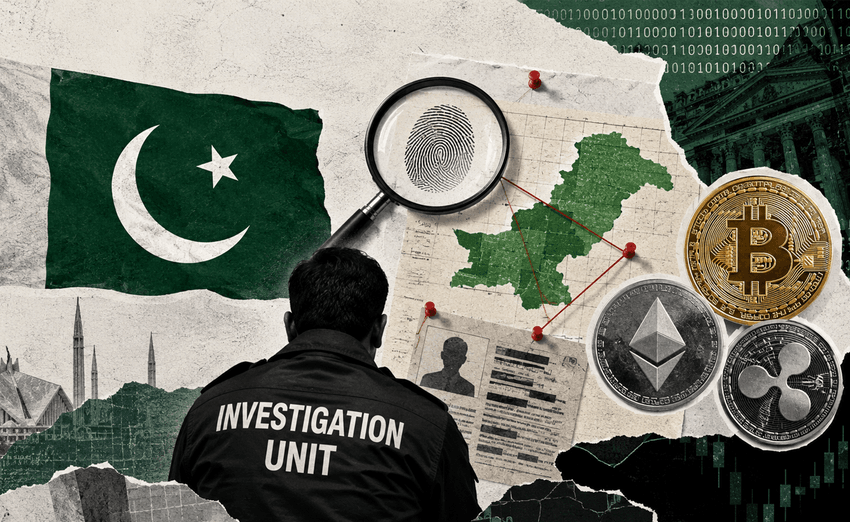

Pakistan has established a specialized cryptocurrency investigation unit as part of its broader effort to regulate the country's rapidly growing digital asset market. The new unit, created within the Federal Investigation Agency's (FIA) National Command and Control Centre (NC3), will focus on investigating money laundering, terrorism financing, and other financial crimes involving cryptocurrencies.
The initiative represents the enforcement side of Pakistan's evolving crypto strategy. While regulators continue licensing digital asset businesses, authorities are simultaneously expanding their ability to detect and prosecute criminal activity involving virtual currencies.
According to FIA Counter-Terrorism Wing Director Dr. Muhammad Athar Waheed, the new unit will investigate the criminal use of cryptocurrencies, while oversight of the broader digital asset industry will remain the responsibility of the newly established Pakistan Virtual Assets Regulatory Authority (PVARA).
National Command Center Expands Capabilities
The cryptocurrency investigation unit will operate within the FIA's newly launched National Command and Control Centre (NC3). The facility brings together multiple investigative capabilities under a single platform, allowing authorities to coordinate financial crime investigations more efficiently.
The center includes anti-money laundering teams, virtual currency investigators, an Interpol coordination office, cyber patrol operations, open-source intelligence specialists, and dark web investigation units, providing law enforcement with a centralized approach to tackling increasingly sophisticated financial crimes.
Dr. Waheed also encouraged other government agencies-including the National Cyber Crime Investigation Agency and the Anti-Narcotics Force-to establish their own dedicated cryptocurrency investigation units. He further confirmed that new procedural rules are being drafted to ensure crypto-related investigations can be completed within clearly defined timeframes.
Pakistan Continues Expanding Its Crypto Strategy
The new enforcement unit arrives as Pakistan accelerates efforts to formalize its cryptocurrency sector. According to Chainalysis' 2025 Global Crypto Adoption Index, Pakistan ranked third worldwide in cryptocurrency adoption, highlighting the country's rapidly growing digital asset ecosystem.
In recent months, the government has lifted its long-standing banking restrictions on cryptocurrencies, established the Pakistan Virtual Assets Regulatory Authority, begun issuing licenses for cryptocurrency exchanges, and explored tokenizing state-owned assets.
Pakistan has also incorporated digital assets into its international financial strategy. The government recently announced cooperation with an affiliate of World Liberty Financial to explore the use of the USD1 stablecoin for cross-border payments, demonstrating its interest in blockchain-based financial infrastructure.
Regulatory Progress Meets Religious Debate
Despite the government's growing support for digital assets, cryptocurrencies remain the subject of ongoing religious debate in Pakistan. Earlier this year, the influential Jamia Darul Uloom Karachi seminary issued a fatwa stating that cryptocurrencies do not qualify as legitimate "wealth" under Islamic law, raising questions about their use as a means of payment.
The ruling introduced uncertainty around Pakistan's digital asset ambitions. However, PVARA Chairman Bilal bin Saqib has since engaged with religious scholars, encouraging a distinction between highly speculative cryptocurrencies and asset-backed blockchain products, including fully reserved stablecoins and blockchain-based sukuk (Islamic financial certificates).
Bilal bin Saqib has argued that Pakistan has the opportunity to "lead the world in Shariah-compliant digital finance" suggesting that properly regulated blockchain assets could align with Islamic financial principles.
By launching its crypto investigation unit while continuing to develop licensing rules and regulatory frameworks, Pakistan is pursuing a dual strategy that combines stronger law enforcement with broader digital asset adoption. Even as debates over the religious status of cryptocurrencies continue, the country is steadily building the institutional infrastructure needed to support a regulated crypto economy.


