

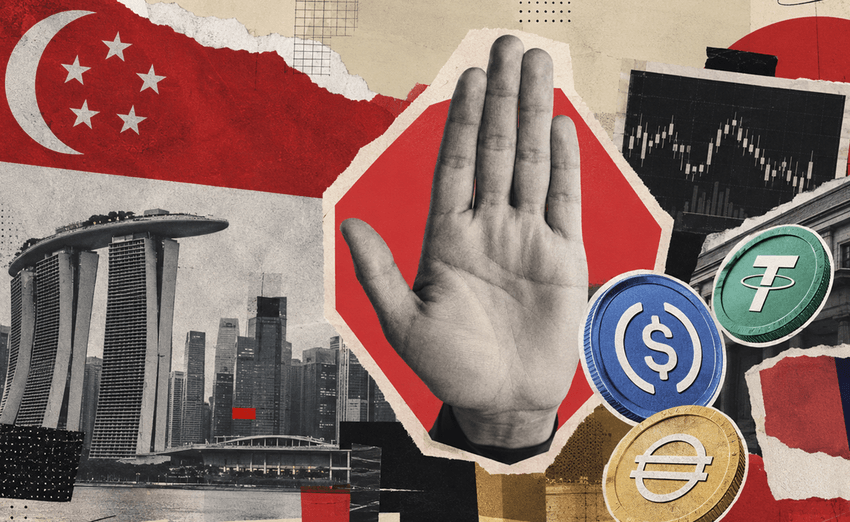

Singapore is proposing tighter requirements for stablecoin issuers, including restrictions on yield-bearing products, as the country moves toward a dedicated regulatory framework for qualifying digital currencies.
Under the proposal, the Monetary Authority of Singapore (MAS) would license Singapore-based issuers of eligible single-currency stablecoins under the Payment Services Act.
To qualify for regulatory recognition, issuers would need to maintain reserve assets worth at least 100% of all stablecoins in circulation. Those reserves would have to remain segregated from other company assets and be valued daily.
Stablecoin holders would also need to be able to redeem their tokens within five business days, providing a defined mechanism for converting digital tokens back into their underlying currency during normal and stressed market conditions.
The framework would impose tougher standards than Singapore's broader rules governing digital payment token providers.
Issuers Face Capital and Reserve Requirements
MAS is also proposing minimum financial requirements intended to ensure issuers can absorb operational losses.
Stablecoin issuers would need to maintain at least S$1 million in base capital or net tangible assets exceeding 50% of annual operating expenses, depending on the final regulatory requirements.
The proposal puts particular emphasis on the quality and liquidity of reserves, rather than simply requiring issuers to demonstrate that assets exceed the value of outstanding tokens.
That distinction could have significant implications for the stablecoin industry.
Tokens backed primarily by cash and highly liquid government securities could find it easier to align with Singapore's requirements. Issuers holding more diversified reserve portfolios may need to restructure their backing assets before receiving regulatory recognition.
The stricter approach could increase compliance costs and create higher barriers to entry, but qualifying issuers would receive something potentially valuable in return: formal recognition under Singapore's stablecoin regulatory regime.
USDC and USDT Could Face Different Compliance Paths
The reserve requirements could also highlight differences between the world's two largest dollar stablecoins.
USDC maintains reserves primarily through cash, short-term US Treasury securities and Treasury-backed instruments, giving it a relatively straightforward reserve structure built around highly liquid assets.
Tether's USDT is also backed by reserves exceeding its outstanding liabilities, but its broader reserve portfolio has historically included assets beyond cash and Treasury securities, including Bitcoin, precious metals and other investments.
Those differences do not automatically determine whether either token would qualify under Singapore's final framework. However, they illustrate how reserve composition could become an increasingly important competitive factor as regulators impose stricter requirements.
Issuers with simple and highly liquid reserves may be able to adapt more quickly, while others could need to change their reserve management or redemption procedures.
Regulatory Recognition Could Become Competitive Advantage
Singapore's framework could create a distinct category of stablecoins that meet MAS requirements and receive official regulatory recognition.
That status could become attractive to exchanges, financial institutions, businesses and consumers seeking digital currencies operating under clearly defined safeguards.
Local stablecoins such as XSGD could potentially benefit from greater regulatory credibility, although regulatory approval alone may not be enough to overcome the enormous liquidity advantage held by established global competitors.
XSGD currently has roughly $12 million in circulating supply, leaving it considerably smaller than USDT and USDC.
The two leading dollar stablecoins already benefit from extensive exchange support, blockchain integrations, payment infrastructure and global liquidity.
For Singapore-regulated stablecoins to compete effectively, regulatory credibility will need to translate into real adoption and liquidity.
Stablecoin Yield Faces Regulatory Limits
One of the most significant elements of Singapore's proposed approach is its treatment of yield and interest connected to regulated stablecoins.
Restricting issuers from offering returns directly on qualifying tokens would reinforce the idea that regulated stablecoins should primarily function as payment and settlement instruments rather than investment products.
Such rules could also shape how exchanges and other intermediaries structure rewards around regulated stablecoins.
Once the licensing framework becomes operational, the market will provide a clearer indication of whether the MAS regulatory label can influence stablecoin adoption.
Trading volumes, exchange integrations, institutional usage and circulating supply will ultimately determine whether regulatory recognition provides a meaningful competitive advantage.
Singapore's proposal therefore represents more than another reserve requirement. By combining strict backing standards, redemption obligations, financial requirements and restrictions on yield, MAS is defining what a regulated stablecoin should look like within one of Asia's largest financial hubs.


