

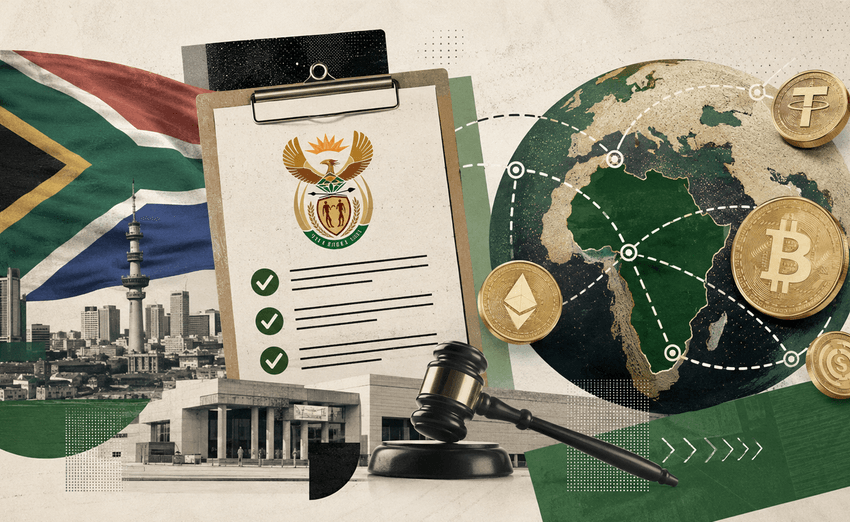

South African regulators have proposed new rules designed to integrate cryptocurrency into the country's existing exchange control system. According to reports, the initiative aims to close regulatory gaps that have allowed digital assets to be used for moving capital across borders outside traditional financial oversight.
Under the proposal, all cryptocurrency transferred out of South Africa would be required to pass through licensed local Crypto Asset Service Providers (CASPs) before reaching foreign platforms or wallets.
The move is intended to give regulators greater visibility into international crypto transactions while ensuring digital assets are treated similarly to traditional financial instruments under South Africa's capital control framework.
New Reporting Requirements for International Transfers
The proposal introduces mandatory reporting for all outbound cryptocurrency transfers.
Every cross-border transaction would need to be reported to the Financial Surveillance Department (FinSurv) of the South African Reserve Bank (SARB).
The reporting obligation would apply whether digital assets are transferred:
- From a licensed South African exchange to a foreign crypto platform
- From a regulated exchange to a private self-custody wallet
However, domestic cryptocurrency trading would remain unaffected. Buying or selling crypto against the South African Rand (ZAR) on licensed local exchanges would not trigger these additional reporting requirements, provided the assets remain inside the country's regulated ecosystem.
Crypto Transfers Tied to Foreign Exchange Limits
South Africa does not intend to ban international crypto transfers, but it plans to align them with existing foreign exchange rules.
Individuals would still be permitted to move cryptocurrency abroad, although only within South Africa's existing annual foreign exchange allowances.
By linking crypto transfers to established capital movement limits, regulators hope to prevent digital assets from being used to circumvent the country's exchange control regulations.
The draft also proposes stricter requirements for businesses. Companies could face new restrictions on using stablecoins for international payments, merchant settlement services, or raising capital through tokenized assets issued overseas.
Self-Custody Wallets Face Greater Scrutiny
One of the proposal's most debated provisions involves privately controlled crypto wallets.
While users would still be allowed to transfer cryptocurrency from regulated exchanges into self-custody wallets, moving those assets back into South Africa's regulated financial system could become subject to additional compliance requirements under certain circumstances.
Authorities argue the measure would improve the ability to verify the origin of digital assets, combat money laundering, and strengthen oversight of international financial flows.
However, industry participants warn the additional compliance burden could complicate operations for investors and businesses that rely on self-custody as part of their long-term digital asset strategy.
Part of South Africa's Expanding Crypto Framework
The proposal forms part of South Africa's broader effort to establish a comprehensive regulatory framework for digital assets.
In recent years, both the South African Reserve Bank (SARB) and the Financial Sector Conduct Authority (FSCA) have introduced licensing requirements for cryptocurrency service providers, gradually expanding oversight of the industry.
Officials emphasized that the proposal does not recognize cryptocurrencies as legal tender. Instead, its objective is to ensure that cross-border digital asset transactions follow the same capital flow principles that already govern traditional financial assets.
The draft Crypto Asset Manual has now entered a public consultation period, allowing industry participants and other stakeholders to submit feedback before the framework is finalized.
If adopted, the new rules would represent another significant step toward integrating cryptocurrency into South Africa's regulated financial system while increasing government oversight of international crypto transactions.


