

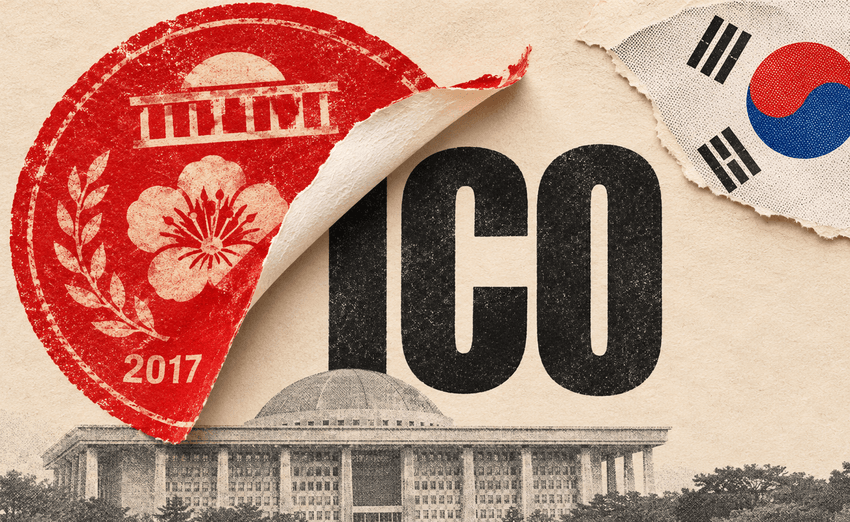

South Korea is preparing to lift its long-standing ban on initial coin offerings (ICOs), potentially allowing domestic cryptocurrency projects to raise funds through public token sales for the first time since 2017.
The Financial Services Commission (FSC) unveiled its proposed Act on Innovation in the Digital Asset Industry and User Protection on November 24, 2026.
The legislation would establish a regulated framework for cryptocurrency issuance, trading and investor protection.
South Korea originally prohibited domestic ICOs in September 2017 amid concerns about fraud, excessive speculation and investor losses.
However, the proposal remains a draft and requires approval from the National Assembly before the restrictions can be lifted.
Crypto Projects Would Face IPO-Style Disclosure Rules
Under the proposed framework, cryptocurrency issuers would need to submit a digital asset white paper to the FSC before offering tokens to investors.
The document would explain the project's business model, fundraising objectives, planned token supply and potential investment risks.
Issuers would also need to disclose how proceeds from token sales would be used.
The requirements are designed to resemble disclosure standards applied to traditional initial public offerings.
Companies and executives could face financial penalties, civil liability or criminal prosecution for misleading statements or significant omissions in their disclosures.
The framework aims to make cryptocurrency fundraising more transparent while reducing opportunities for fraudulent token offerings.
South Korea Wants Crypto Fundraising Back Onshore
The FSC acknowledged that its original ICO ban pushed numerous South Korean cryptocurrency projects overseas, rather than eliminating token fundraising.
Several businesses established foreign entities to conduct cryptocurrency offerings outside the country's regulatory restrictions.
Major Korean gaming companies, including Wemade and Netmarble, have previously used overseas structures for blockchain-related activities.
Regulators now hope that permitting domestic ICOs could bring investment, business development and employment opportunities back to South Korea.
The proposed changes would also provide companies with clearer legal requirements for issuing and distributing digital assets.
However, regulatory approval would not guarantee the commercial success of individual cryptocurrency projects.
Stablecoins and Crypto Exchanges Face New Restrictions
The draft legislation extends beyond ICOs, introducing additional requirements for stablecoin issuers and cryptocurrency exchanges.
Under the proposal, Korean won-backed stablecoins could be issued only through consortiums in which commercial banks hold majority ownership.
The framework would also generally limit major shareholders to 20% ownership of cryptocurrency exchanges, with exceptions allowing stakes of up to 34%.
Additionally, existing protections against market manipulation would be expanded to cryptocurrency-to-cryptocurrency trading.
The proposed legislation organizes the industry into regulated activities covering exchanges, brokerage, trading, custody and asset management.
These measures are intended to strengthen market transparency and establish clearer responsibilities for digital asset businesses.
South Korea's Crypto Industry Awaits Parliamentary Approval
The proposal represents a significant shift in South Korea's cryptocurrency policy, combining renewed opportunities for token fundraising with stricter investor protections.
The country already operates one of Asia's most active cryptocurrency trading markets, but domestic token issuance has remained heavily restricted.
The FSC's initiative reflects a broader international trend toward regulating cryptocurrency fundraising rather than prohibiting it outright.
However, the National Assembly must debate and approve the legislation before any changes take effect.
Lawmakers could revise the proposed requirements, including ownership limits, stablecoin restrictions and disclosure obligations.
No confirmed implementation date has been announced.
For now, South Korea's nine-year ICO ban remains in force, although the latest proposal creates a potential legal pathway for domestic cryptocurrency fundraising to return.


