

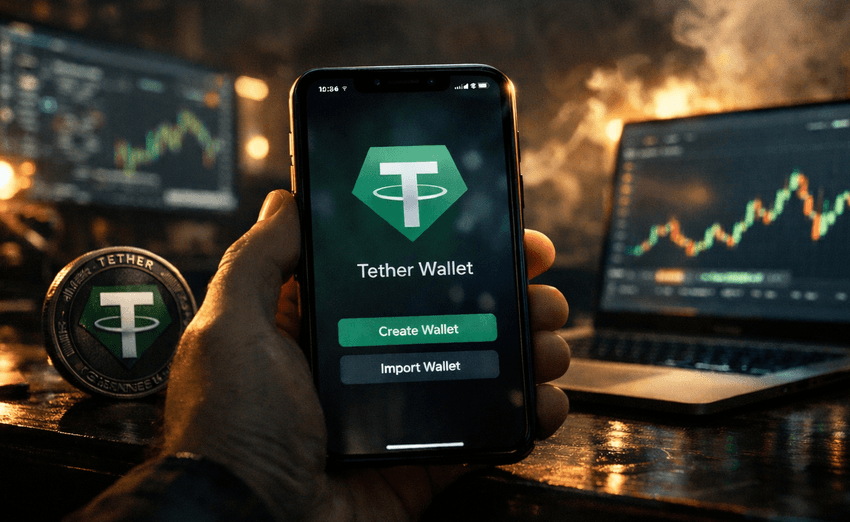

A Long-Awaited Move From Tether
After years of dominating stablecoin usage without a native app, Tether has finally launched its own wallet-and it’s a big deal.
The new Tether.wallet is a self-custodial, multi-asset app designed to bring Tether even closer to everyday users, especially those relying on it for remittances and global payments.
With over 570 million users globally and millions of new wallets added each quarter, Tether isn’t just entering the wallet space-it’s stepping in with massive built-in distribution.
570 million people trust Tether. Now, we’re putting that global infrastructure directly into your hands. 🌐 Meet Tether Wallet: the fully self-custodial app designed for everyday life.
— tether wallet (@tetherwallet) April 14, 2026
▪️Universal: 💸 USD₮, USA₮, XAU₮, & Bitcoin (On-chain + Lightning⚡).
▪️Simple: Send to… pic.twitter.com/TfeWRT0VOl
570 million people trust Tether. Now, we’re putting that global infrastructure directly into your hands. 🌐 Meet Tether Wallet: the fully self-custodial app designed for everyday life.
— tether wallet (@tetherwallet) April 14, 2026
▪️Universal: 💸 USD₮, USA₮, XAU₮, & Bitcoin (On-chain + Lightning⚡).
▪️Simple: Send to… pic.twitter.com/TfeWRT0VOl
From Infrastructure to End-User Product
Until now, USDT has lived mostly through third-party platforms-centralized exchanges, DeFi protocols, and wallets.
That changes with Tether.wallet.
The app acts as a direct hub for multi-chain USDT, while also supporting key assets like Bitcoin and tokenized gold (XAUT). It’s a shift from being just infrastructure to becoming a consumer-facing financial product.
And that matters-because it closes a major gap in the ecosystem.
Built for Simplicity (Not Just Power Users)
What makes this wallet stand out isn’t just what it supports—it’s how it simplifies crypto usage.
Users will be able to pay transaction fees directly in USDT, removing the usual headache of juggling multiple gas tokens across different chains. That alone eliminates one of the biggest friction points in DeFi and cross-chain usage.
On top of that, the wallet introduces human-readable usernames, replacing long, error-prone wallet addresses.
In short, it’s designed to make crypto feel less like infrastructure-and more like a usable financial tool.
Self-Custody Meets Global Scale
Despite being backed by a centralized giant, the wallet is fully self-custodial.
That means users control their private keys, sign transactions locally, and aren’t relying on a third party to hold their funds.
At the same time, Tether is blending this with compliance and security layers, aiming to support regulated adoption globally. The wallet operates under the British Virgin Islands jurisdiction, and certain features like fiat redemption remain tied to KYC verification.
This hybrid approach signals where the market is heading - self-custody with optional compliance rails
Timing Matters: Growth + Security Pressure
The launch comes at a critical moment.
USDT activity has been surging, with daily active wallets peaking above 334,000 in March. At the same time, the industry continues to battle scams, hacks, and phishing attacks.
Tether has historically been fast at freezing suspicious funds-and now, its wallet could extend that capability with tools for address screening, monitoring, and fraud detection.
That’s a controversial but powerful mix user control + network-level oversight
Why This Could Be Bigger Than It Looks
This isn’t just another wallet launch-it’s a strategic move.
By creating its own app, Tether is positioning itself as a full-stack financial platform, not just a stablecoin issuer.
It reduces reliance on third-party wallets, strengthens its ecosystem, and potentially becomes the default gateway for USDT users worldwide.
And given USDT’s dominance in emerging markets, this could accelerate real-world crypto adoption faster than most DeFi innovations.


