

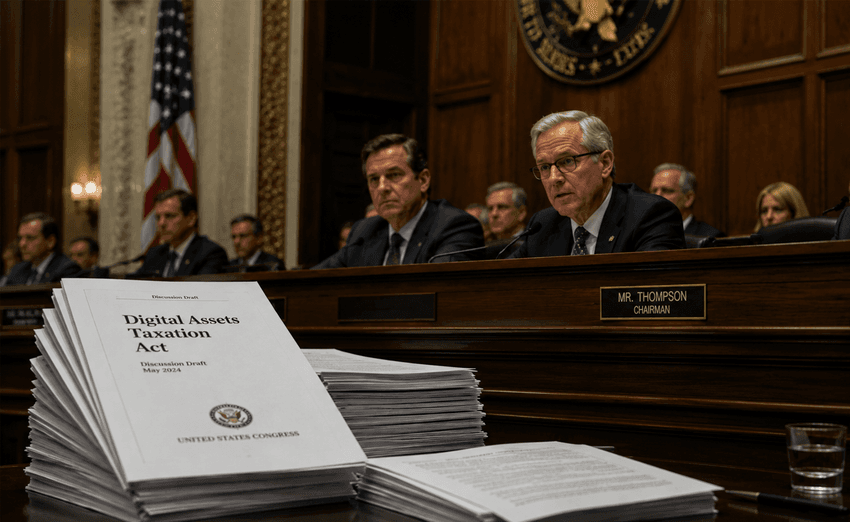

The U.S. Congress is taking another major step toward building a comprehensive regulatory framework for digital assets, this time focusing on cryptocurrency taxation. Members of the House Ways and Means Committee are set to debate several new tax proposals that could significantly change how investors, miners, validators, and crypto users report and pay taxes.
The hearing arrives as Washington continues working on broader crypto legislation, including the Clarity Act, while regulators begin implementing recently approved stablecoin rules. Industry leaders argue that tax reform is the missing piece needed to create a complete regulatory environment for digital assets.
Several Crypto Tax Reforms Are on the Table
The proposed legislation covers multiple areas of crypto taxation, aiming to align digital assets with traditional financial markets while addressing long-standing complaints from the industry.
Among the proposals is a bill introducing a de minimis exemption, allowing small crypto transactions to avoid taxable events, making everyday payments with digital assets far easier.
Another proposal would allow staking and mining rewards to be taxed only when they are sold, instead of when they are received. This has been one of the crypto industry's biggest requests for years, as many investors argue they should not owe taxes on newly created assets before generating actual profits.
Other bills would clarify tax treatment for charitable crypto donations, bringing them closer to the rules currently applied to stocks and other appreciated assets.
Wash Sale Proposal Sparks Industry Backlash
One of the most controversial proposals would extend wash sale rules to cryptocurrencies.
Currently, investors can sell crypto at a loss and immediately repurchase the same asset while still claiming the tax deduction. The proposed legislation would eliminate that strategy, similar to rules already applied to stocks.
Critics argue the idea would be extremely difficult to enforce in decentralized finance.

Coin Center policy experts also warned that applying traditional financial reporting rules to blockchain transactions could create massive compliance burdens for ordinary users who frequently move assets across wallets or interact with decentralized applications.
Banks and Crypto Industry Clash Over Tax Fairness
The proposed reforms have also drawn criticism from traditional banking organizations.
The American Bankers Association argues that some of the bills would provide cryptocurrencies with preferential tax treatment compared to conventional investments by allowing deferred taxation on staking rewards and mining income.
Meanwhile, crypto advocates insist that digital assets deserve rules specifically designed for blockchain technology rather than outdated tax frameworks built around traditional intermediaries. Industry representatives argue that existing tax regulations often classify simple blockchain interactions as taxable events, creating unnecessary complexity for users.
Political Support Could Shape the Future of US Crypto Policy
Beyond taxation itself, the hearing could offer an early indication of bipartisan support for future crypto legislation ahead of the upcoming midterm elections.
Several experts from Coinbase, Fidelity Investments, Coin Center, and NYU Law are expected to testify before lawmakers as Congress considers whether these proposals could eventually become part of a broader legislative package.
If approved, the reforms could fundamentally reshape how Americans report and use cryptocurrencies, potentially making digital assets easier to integrate into everyday financial life while providing long-awaited regulatory clarity for the industry.


