

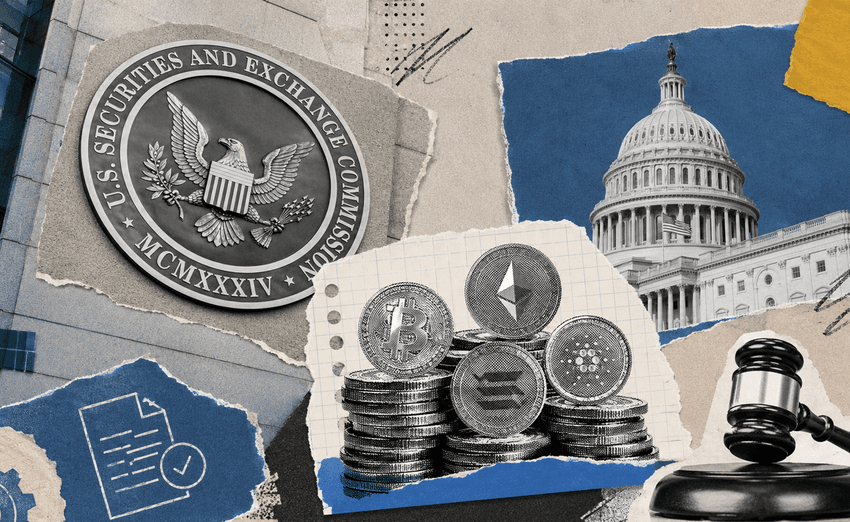

The U.S. Securities and Exchange Commission has proposed a new regulatory framework for crypto offerings, moving ahead with rulemaking while Congress struggles to pass comprehensive digital asset legislation.
Announced Tuesday, “Regulation Crypto Assets” or Reg Crypto, would establish what the SEC describes as a tailored offering regime designed to help crypto businesses raise capital while maintaining investor protections.
The proposal is separate from the SEC's planned Innovation Exemption, which focuses on experimentation involving tokenized assets and other emerging financial technologies.
SEC Chair Paul Atkins said modernizing the agency's regulatory framework is intended to encourage crypto innovation within the United States.

The proposal builds on guidance issued jointly by the SEC and Commodity Futures Trading Commission in March, which clarified the agencies' interpretation of how federal securities laws apply to digital assets and transactions.
Crypto Startups Could Receive New Exemptions
A central part of Reg Crypto is a proposed “startup exemption” allowing certain digital asset offerings of up to $5 million to avoid registration requirements under the Securities Act of 1933 for four years.
The Securities Act establishes disclosure and anti-fraud requirements for securities offerings, making an exemption potentially significant for smaller crypto companies attempting to raise capital.
The SEC is also proposing a broader fundraising exemption covering offerings of up to $75 million for one year.
Another important element is a proposed safe harbor governing when a digital asset could stop being treated as a security.
Under the proposal, an asset could potentially lose that classification after satisfying certain conditions and once the project has “ceased all managerial efforts.”
The SEC had initially scheduled a meeting to consider the proposal last Friday, but the meeting was canceled shortly beforehand because of what an agency spokesperson described as an unforeseen scheduling issue.
SEC Moves as CLARITY Act Stalls
The regulatory push comes as the Digital Asset Market Clarity Act remains stuck in Washington, despite efforts to establish comprehensive federal rules governing the cryptocurrency industry.
The CLARITY Act has encountered several political obstacles, including disagreements between banks and crypto companies over stablecoin rewards and debates surrounding potential conflicts of interest involving President Donald Trump's crypto businesses.
A procedural Senate vote is currently scheduled for mid-September, but lawmakers face a narrowing legislative window as attention shifts toward the November elections.
The delays are increasing pressure on federal regulators to determine how much of the crypto regulatory framework can be established using their existing authority.
White House Warns Regulators Won't Wait Forever
White House crypto adviser Patrick Witt suggested Tuesday that both the SEC and CFTC are preparing a substantial wave of rulemaking if Congress fails to act.
Speaking during a SALT conference panel, Witt said regulators are currently giving lawmakers an opportunity to complete legislation before moving more aggressively.
He described September as a critical window for Congress, suggesting that regulators could accelerate their own crypto rules if the legislation fails to advance.
However, agency rulemaking cannot necessarily provide the same permanence as legislation passed by Congress. Future commissions could potentially revise or reverse regulatory frameworks established through existing agency authority.
Proposal Begins a Longer Regulatory Process
Reg Crypto is still a proposal rather than a finalized rule, meaning the framework could change significantly before implementation.
SEC Commissioner Hester Peirce described the proposal as only one part of a much broader effort to create clearer crypto regulations.
The SEC has opened a 60-day public comment period, allowing crypto companies, investors and other interested parties to respond before the agency considers its next steps.
The timing puts additional pressure on Congress. With the CLARITY Act facing a difficult September test, the SEC is demonstrating that federal crypto policy could continue developing even if lawmakers fail to agree on comprehensive legislation.


