

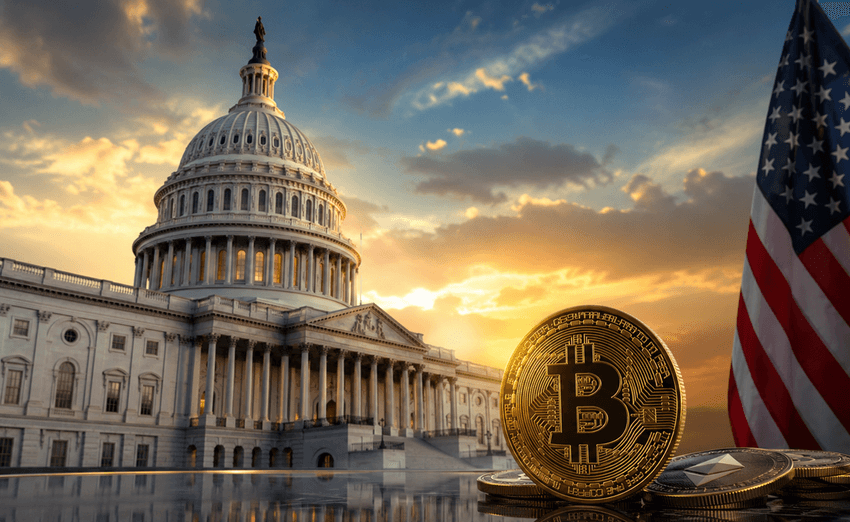

Senate Banking Committee Sets Vote for the CLARITY Act
The long-awaited CLARITY Act is officially heading to a Senate Banking Committee vote on May 14, marking a major moment for the future of crypto regulation in the United States.
Senate Banking Committee chair Tim Scott confirmed on Friday that lawmakers will hold a markup vote on the bill next Thursday, reigniting momentum around legislation that many crypto firms view as critical for the industry’s future in America.
The bill was originally introduced in July 2025 and aims to establish clearer rules for digital assets, crypto companies, and decentralized finance platforms operating in the U.S.
Why the CLARITY Act Matters
For years, crypto companies have argued that unclear regulations in the United States created uncertainty around:
- token classifications,
- exchange operations,
- DeFi protocols,
- and stablecoin products.
That uncertainty intensified during the Biden administration under former SEC chair Gary Gensler, whose aggressive enforcement approach pushed several crypto firms to consider moving offshore.
Supporters of the CLARITY Act believe the legislation could finally provide a legal framework that allows innovation to remain inside the United States rather than shifting to friendlier jurisdictions abroad.
Coinbase Rejoins the Push
The announcement triggered an immediate reaction across the crypto industry, especially from Coinbase, which had previously withdrawn support for the legislation earlier this year.
In January, Coinbase raised concerns over several aspects of the bill, including:
- limited legal protections for open-source developers,
- restrictions on stablecoin yield products,
- and unclear DeFi provisions.
Now, following the markup announcement, Coinbase executives appear optimistic again.

Meanwhile, Coinbase chief policy officer Faryar Shirzad described the upcoming vote as a “big step forward,” arguing the bill is necessary for:
Big step forward.
— Faryar Shirzad 🛡️ (@faryarshirzad) May 8, 2026
Appreciate @SenatorTimScott and the Senate Banking Committee moving toward markup of the CLARITY Act on May 14.
Clear market structure rules are essential for protecting consumers, supporting innovation, and ensuring this technology develops in the United… pic.twitter.com/ngqCOZmJZi
Big step forward.
— Faryar Shirzad 🛡️ (@faryarshirzad) May 8, 2026
Appreciate @SenatorTimScott and the Senate Banking Committee moving toward markup of the CLARITY Act on May 14.
Clear market structure rules are essential for protecting consumers, supporting innovation, and ensuring this technology develops in the United… pic.twitter.com/ngqCOZmJZi
Bipartisan Support Will Be Critical
Despite the renewed momentum, passing the CLARITY Act will still be difficult.
According to Coinbase vice president of U.S. policy Kara Calvert, the bill will likely need at least 60 Senate votes to move forward, meaning bipartisan support is essential.
Speaking earlier this week at the Consensus 2026 conference, Calvert said she expected the markup process to resume soon-something that has now officially happened.
Cynthia Lummis Pushes for Passage
Pro-crypto senator Cynthia Lummis also publicly backed the legislation ahead of the vote, urging lawmakers to advance the bill out of committee.
Lummis has become one of the strongest crypto advocates in Washington and has repeatedly argued that the United States risks falling behind globally if regulators fail to establish clear digital asset rules.
Let's pass the Clarity Act out of the Banking Committee on Thursday!
— Senator Cynthia Lummis (@SenLummis) May 9, 2026
Let's pass the Clarity Act out of the Banking Committee on Thursday!
— Senator Cynthia Lummis (@SenLummis) May 9, 2026
A Turning Point for US Crypto Regulation?
The upcoming committee vote could become one of the most important regulatory moments for the crypto industry this year.
While the bill still faces political hurdles, the fact that it is moving again signals that Washington may finally be shifting from enforcement-driven crypto policy toward a more formal legislative framework.
For crypto companies operating in the U.S., that shift could determine whether the country remains a major hub for blockchain innovation-or continues watching projects move overseas.


