

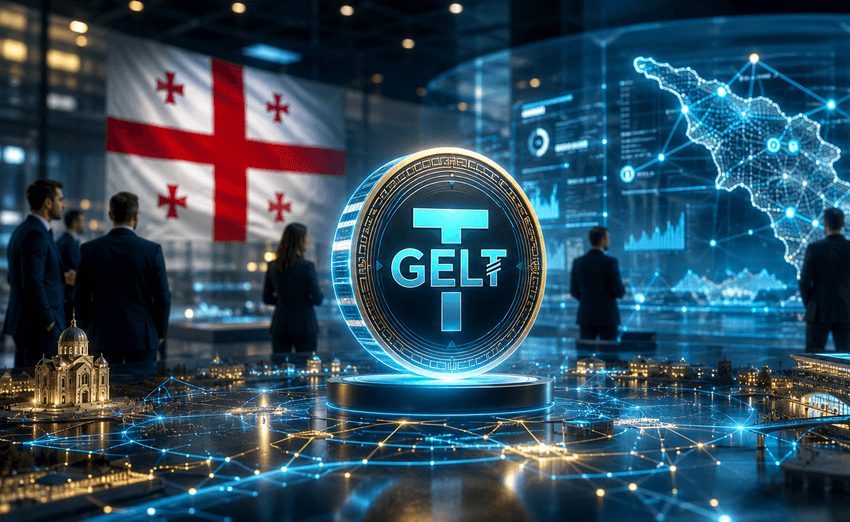

Georgia Partners With Tether for National Stablecoin Initiative
The government of Georgia has announced a new partnership with Tether to launch GEL₮, a stablecoin tied to the country’s national currency.
According to the official announcement, the project aims to create a blockchain-compatible version of the Georgian Lari that can support faster payments, lower transaction costs, and programmable financial services.
Officials say the stablecoin will serve as part of a broader effort to modernize Georgia’s financial infrastructure and strengthen the country’s role inside the global digital asset economy.
The launch positions Georgia among a growing list of governments experimenting with stablecoin-based financial systems instead of relying solely on traditional banking rails.
Tether and the Government of Georgia to Launch GEL₮, the Official Stablecoin of Georgiahttps://t.co/ueSLlJzot1
— Tether (@tether) May 25, 2026
Tether and the Government of Georgia to Launch GEL₮, the Official Stablecoin of Georgiahttps://t.co/ueSLlJzot1
— Tether (@tether) May 25, 2026
GEL₮ Designed for Payments and Cross-Border Finance
The Georgian government says GEL₮ is being built to support instant transactions, fintech innovation, and international payments.
Authorities specifically highlighted the stablecoin’s potential role in cross-border trade and digital commerce, areas where blockchain-based settlement systems can often outperform slower traditional banking networks.
Georgia also noted that the project aligns with emerging international stablecoin regulation frameworks, including recent developments in the United States tied to the GENIUS Act.
Officials believe compatibility with global regulatory standards could make GEL₮ more useful for international financial integration and future interoperability with foreign digital asset systems.
Government Wants a Digitally Connected Financial System
Prime Minister Irakli Kobakhidze described the project as part of a long-term strategy to create a more transparent and interconnected financial ecosystem.
According to Kobakhidze, Georgia is attempting to build a digitally enabled economy capable of integrating modern blockchain infrastructure into everyday financial activity.
Meanwhile, Tether CEO Paolo Ardoino said stablecoins are no longer simply niche crypto products but are increasingly becoming core pieces of global financial infrastructure.
The President of the National Bank of Georgia, Natia Turnava, also welcomed the collaboration and stated that the country intends to continue working with international technology companies to modernize its financial architecture.
Georgia Already Has One of the World’s Highest Crypto Adoption Rates
Georgia’s move into stablecoins comes after years of strong crypto adoption across the country.
According to Chainalysis’ 2025 Global Crypto Adoption Index, Georgia ranked third worldwide in crypto adoption relative to population size, trailing only Ukraine and Moldova.
The country’s growing digital asset sector has been fueled by several factors, including relatively cheap electricity for mining operations, crypto-friendly regulations, and strong demand for lower-cost remittance solutions.
Georgia processes more than $2 billion in annual remittances, and stablecoins such as USDT and USDC have become increasingly attractive alternatives to expensive international wire transfers that often carry fees between 7% and 10%.
Crypto Regulation Has Expanded Since 2023
Georgia has steadily tightened oversight of its crypto sector while still maintaining a relatively innovation-friendly environment.
Since early 2023, the National Bank of Georgia has required virtual asset service providers to register and comply with anti-money laundering and know-your-customer regulations.
That framework has helped bring more legitimacy to the sector while still encouraging blockchain-related business activity.
The country has also become known internationally as a destination for crypto mining due to its access to low-cost hydropower resources.
More Details Still Expected
Despite the announcement, several important details surrounding GEL₮ remain unclear.
Officials have not yet disclosed the blockchain infrastructure that will power the stablecoin, how reserve backing will function, or the exact launch timeline.
The government also said additional information regarding compliance rules, reserve structures, and rollout procedures will be announced at a later stage.
Even so, the initiative signals that Georgia is moving aggressively to position itself as one of the most crypto-integrated economies in Eastern Europe while leveraging stablecoins to modernize both domestic and international payments.


