

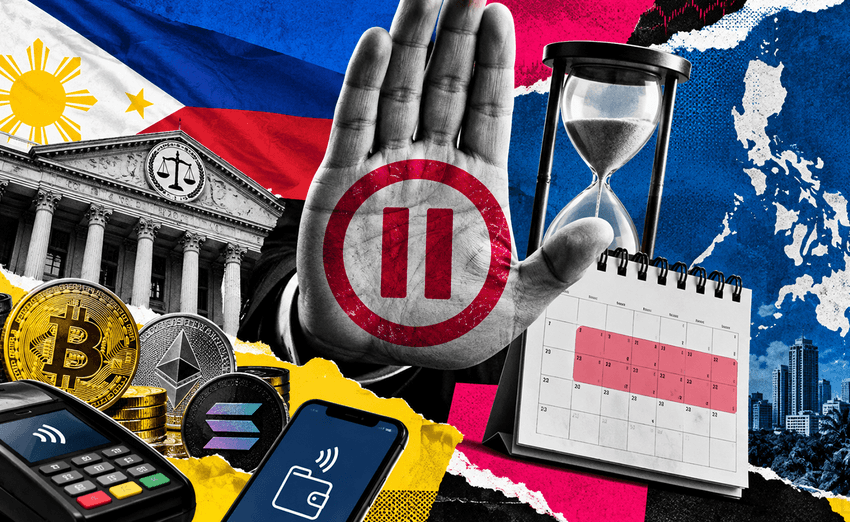

The Bangko Sentral ng Pilipinas (BSP) has proposed a 12-month pause on applications from new payment system operators as the central bank prepares to strengthen oversight of the country's rapidly expanding payments sector.
The measure appears in a proposed circular titled “Regulations to Strengthen Integrity Controls in Payment Transactions” which would amend the Manual of Regulations for Payment Systems.
The BSP wants the temporary freeze to provide time to rework how payment operators are licensed and supervised, particularly as QR and mobile payments continue expanding across the Philippines.
Regulators are increasingly concerned that payment activity has developed faster than existing monitoring systems. Complex arrangements involving multiple intermediaries can make it difficult to identify the ultimate merchant receiving funds or stop suspicious transactions quickly.
New Applications Could Be Paused for 12 Months
If finalized, the BSP would stop accepting and processing new applications to operate payment systems for one year.
Applications already submitted would remain under review during the pause. Businesses would also generally be prevented from starting activities requiring operator registration unless they received separate authorization from the central bank.
The proposal specifically identifies licensed virtual asset service providers (VASPs) as high-risk merchants, alongside casinos and gaming businesses holding player funds, adult-oriented businesses and money service companies such as remittance and currency exchange providers.
Banks and other supervised institutions would be expected to establish direct merchant relationships with regulated VASPs, rather than onboarding them through additional intermediary layers.
The goal is to make the actual recipient of payments easier to identify.
Crypto Firms Face Stricter Monitoring
Under these direct arrangements, financial institutions would need to apply enhanced monitoring and transaction controls based on each merchant's individual risk profile.
That could include restrictions on transaction sizes and payout schedules, particularly for businesses classified as presenting higher financial crime risks.
The proposed changes reflect the BSP's broader effort to increase transparency across payment chains, where multiple service providers can otherwise make suspicious activity more difficult to trace.
Crypto businesses are therefore part of a much wider payments crackdown rather than the sole target of the proposed framework.
The rules would nevertheless increase scrutiny on VASPs already operating in the Philippines, adding another layer of compliance alongside existing licensing requirements.
National QR Merchant Database Planned
The BSP is also proposing a National QR Code Merchant Database covering businesses accepting payments through the country's standardized QR system.
The database would record merchants and classify their status as active, restricted, suspended or terminated.
If one provider changes a merchant's status, other institutions working with the same business would automatically receive an alert and be expected to conduct their own checks.
A temporary secure registry is expected within 90 days after the rules take effect, while the complete database would be targeted for operation within 12 months. All active merchants would then need to be recorded and validated within 15 months.
Institutions would additionally have to report material fraud, sanctions violations, cybersecurity or data incidents and unlicensed merchant activity within 24 hours of discovery, followed by more detailed reporting.
Philippines Continues Tightening Crypto Oversight
The proposal follows previous efforts by Philippine regulators to strengthen oversight of cryptocurrency businesses operating without local authorization.
In August 2025, the Philippine Securities and Exchange Commission warned 10 cryptocurrency exchanges, including OKX, Bybit, KuCoin and Kraken, over services allegedly provided to Filipino customers without appropriate local authorization.
The SEC also said it would coordinate with major technology platforms to restrict advertising and app access associated with unauthorized providers.
A month later, the Philippine government launched Integrity Chain, a blockchain-based record system for public-works contracts introduced following public protests concerning alleged corruption involving flood-control projects.
The latest BSP proposal shows how the country is simultaneously exploring blockchain technology while strengthening oversight of companies handling digital assets and electronic payments.
The circular remains a proposal, meaning its requirements are not yet final. The BSP is collecting feedback before deciding on the completed framework.
If approved, the circular would take effect 15 days after its official publication, beginning a broader restructuring of payment supervision and temporarily closing the door to new operator applications.
For the crypto industry, the most significant development is the classification of regulated VASPs as high-risk merchants requiring direct relationships and stronger monitoring, adding further compliance requirements for companies seeking access to the Philippine payments ecosystem.


