

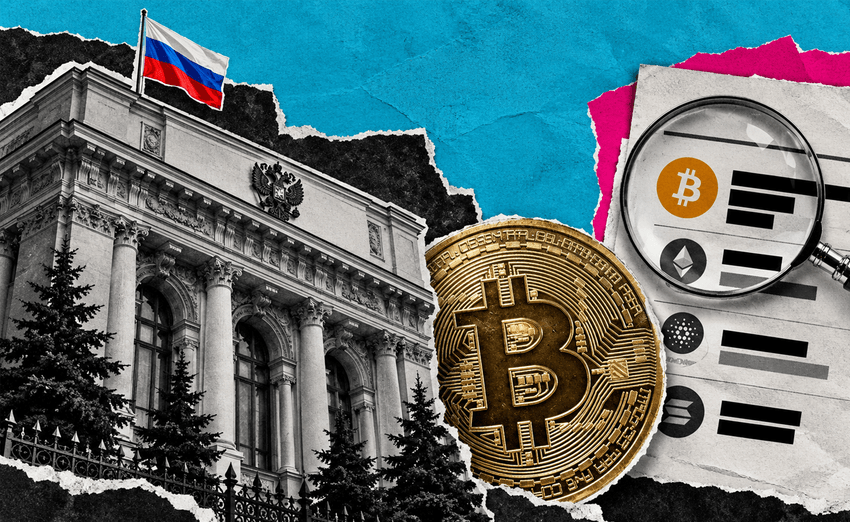

The Bank of Russia has proposed expanding official financial statements to include clients’ cryptocurrency holdings and related income, as the country continues implementing its new digital asset regulatory framework.
Under a draft amendment published by the central bank, credit institutions and other financial organizations would add digital currencies to standardized statements they prepare for customers who need to disclose income, assets and financial obligations. If adopted as proposed, the changes would take effect on July 1, 2027.
The documents are particularly relevant to Russia's anti-corruption disclosure system, under which categories including public officials, lawmakers and certain employees of state institutions must report financial interests.
Statements Would Show Crypto Holdings and Income
The proposed changes go beyond simply identifying whether someone owns cryptocurrency.
Financial organizations would include information such as the name of the digital currency, acquisition dates and total quantity held. For cryptocurrency obtained through mining or participation in a mining pool, the acquisition date would correspond to when those assets were received.
The statements would also include income generated from selling digital currencies, alongside information about certain digital financial assets and digital rights.
Income derived from crypto activity would be reported using the relevant tax-base calculation under Russian tax law. The proposal is designed to update an existing standardized reporting form rather than establish a standalone declaration system exclusively for cryptocurrency.
Importantly, the proposal applies to information that credit and non-credit financial institutions prepare for customers upon request. It should not be read as requiring an ordinary bank to independently discover every self-custodied wallet belonging to every Russian customer.
Rules Follow Russia’s New Crypto Law
The proposal follows Russia's adoption of its first broad framework governing cryptocurrency circulation.
The Digital Currencies and Digital Rights law took effect on September 1, 2026, creating regulated infrastructure for crypto exchanges, intermediaries and digital depositories.
Both qualified and non-qualified investors can participate in the regulated market, although retail investors face additional restrictions.
The Bank of Russia has proposed allowing non-qualified investors to purchase Bitcoin, Ethereum and USDT after passing an investor test, subject to an annual limit of 300,000 rubles per intermediary. Qualified investors can access a wider range of cryptocurrencies without the same purchase cap.
Russia continues to prohibit cryptocurrency from being used as a general means of payment for goods and services inside the country.
Russia Builds Regulated Crypto Infrastructure
The Bank of Russia is simultaneously developing the infrastructure needed to bring crypto trading into the regulated financial system.
Draft regulations establish requirements for digital depositories, which will record cryptocurrency and digital-right ownership and provide access to those assets. Depending on their activities, these institutions would need minimum equity ranging from 50 million to 250 million rubles.
Some of the most restrictive provisions of the new crypto framework do not take effect until July 1, 2027.
From that date, residents generally must conduct covered cryptocurrency transactions through authorized participants, subject to statutory exceptions. Banks will also be required to reject certain transfers when they suspect the recipient is illegally operating a digital currency business.
The timing therefore aligns the proposed disclosure requirements with a broader shift toward licensed crypto infrastructure.
Crypto Oversight Expands as Digital Ruble Rolls Out
Russia's strategy combines legal access to cryptocurrency with tighter supervision of how digital assets interact with the domestic financial system.
The central bank is responsible for developing rules for regulated crypto market participants, while other agencies oversee areas including taxation and suspicious financial activity.
At the same time, Russia began the large-scale rollout of its digital ruble on September 1, requiring major banks to provide customers with access to the central bank digital currency infrastructure. Participation remains optional for consumers, according to the Bank of Russia.
The proposed disclosure rules add another layer to this expanding framework. Rather than banning cryptocurrency ownership, Russia is building systems that make regulated crypto holdings and income increasingly visible within existing financial and anti-corruption reporting structures.
If the draft is adopted without major changes, financial institutions will begin incorporating the new cryptocurrency information into applicable statements from July 1, 2027.


