

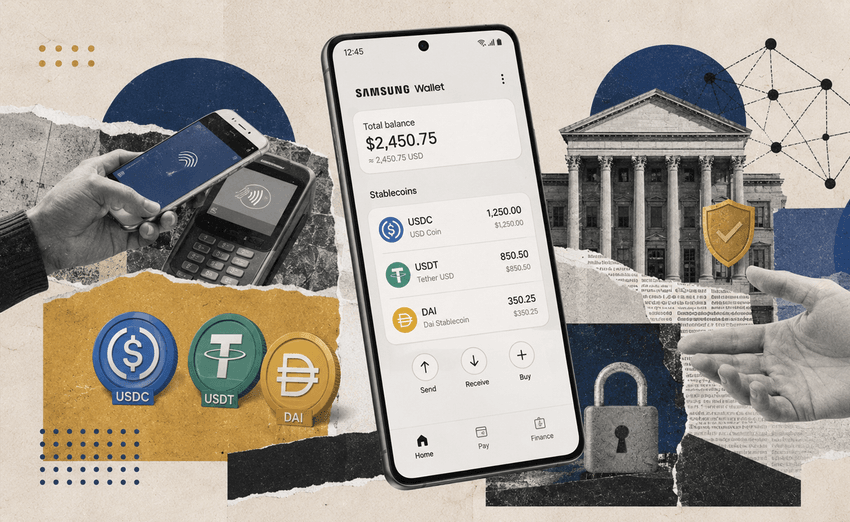

Samsung is preparing to integrate stablecoins into Samsung Wallet, a move that could significantly accelerate mainstream cryptocurrency adoption. The announcement was made during the company's Galaxy Unpacked 2026 event on July 22, where Samsung presented Wallet as a comprehensive financial hub combining payments, digital identity, digital assets, and Galaxy services.
According to reports from Digital Asset, later independently confirmed by Reuters, Samsung intends to transform Samsung Wallet from a traditional payment application into a broader platform supporting digital assets, including stablecoins.
Rather than requiring users to install dedicated cryptocurrency applications, the integration would allow Galaxy smartphone owners to access blockchain-based payments directly through an app already built into their devices. By embedding stablecoins into an existing consumer platform, Samsung could lower one of the biggest barriers preventing wider crypto adoption.
However, Samsung has not yet disclosed which stablecoins will be supported, which issuers will participate, or when the feature will become available across global markets.
Samsung Wallet Evolves Into a Digital Finance Hub
The stablecoin initiative is part of Samsung's broader strategy to make Wallet the center of everyday digital finance. The company said the platform will continue expanding beyond traditional payments by bringing together digital assets, rewards, identity services, and financial products within a single application.
Samsung also emphasized that its next generation of Galaxy devices will rely more heavily on AI-powered personalized experiences, with Samsung Wallet playing an increasingly important role in users' daily activities.
The Wallet has steadily evolved since the company merged Samsung Pay and Samsung Pass in 2022. Today, it already supports payment cards, digital IDs, boarding passes, home and vehicle keys, and cryptocurrency portfolio tracking. Adding native stablecoin functionality would move the platform beyond displaying crypto assets and toward enabling real-world blockchain payments.
Samsung stated that all financial services within the Wallet will continue to be protected by Samsung Knox, its security platform that uses end-to-end encryption to safeguard user information.
Galaxy Card Expands Samsung's Financial Services
Alongside the stablecoin announcement, Samsung introduced the Samsung Galaxy Card, a new financial product integrated directly into Samsung Wallet.
According to Reuters, the card will launch in the United States, with Barclays serving as the issuing bank and Visa providing the payment network. The launch signals Samsung's growing ambitions beyond smartphones and consumer electronics as it expands deeper into digital financial services.

The introduction of Galaxy Card complements Samsung's broader vision of turning Wallet into a unified platform for both traditional finance and digital assets.
Stablecoins Move Closer to Mainstream Adoption
Samsung's announcement comes as stablecoins continue gaining momentum across the global payments industry. According to the Fireblocks State of Stablecoins 2025 survey, conducted among nearly 300 banks and payment providers, almost half of respondents identified real-time payments as the biggest advantage of stablecoins, while 85% said improving regulation is now driving adoption rather than slowing it down.
Meanwhile, companies including Visa and blockchain analytics firm Allium have launched tools tracking the growing use of stablecoins such as USDC and USDT across major blockchain networks, highlighting how these assets are increasingly being used beyond cryptocurrency trading.
What the industry has lacked, however, is a large-scale consumer gateway capable of bringing stablecoins directly into the hands of everyday users.
If Samsung proceeds with its plans, hundreds of millions of Galaxy smartphone owners could gain seamless access to blockchain-based payments through a familiar application. Such a move would represent one of the largest mainstream cryptocurrency integrations to date and could increase pressure on other smartphone manufacturers and digital wallet providers to accelerate their own crypto payment strategies.


