

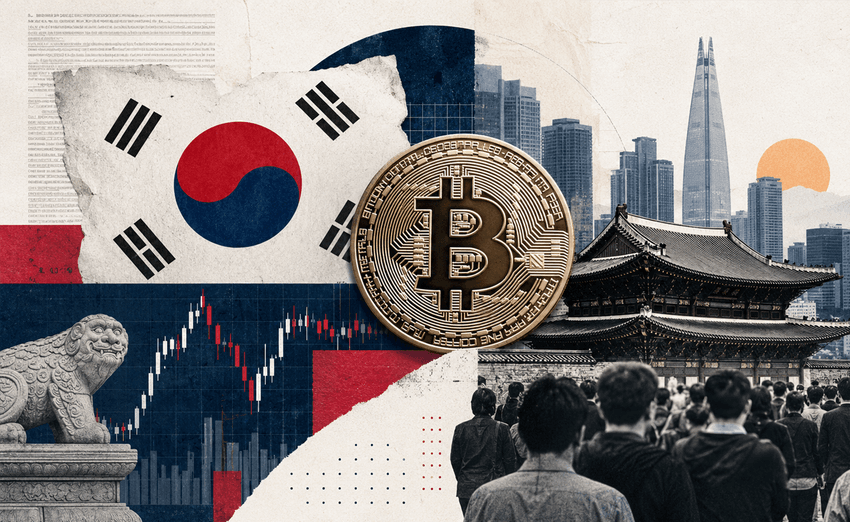

South Korea is taking another major step toward integrating cryptocurrency into its financial system by preparing legislation that would officially recognize virtual assets as part of the country's public wealth. The initiative reflects Seoul's broader effort to modernize its financial framework and remain competitive with jurisdictions such as the United States, the European Union, and Japan.
According to the Ministry of Finance and Economy (MOFE), lawmakers are drafting a new Basic Law on State Assets that will replace the existing State Property Act, which has remained largely unchanged since 1950 and primarily focuses on land and physical property. The new legislation would expand the definition of government-owned assets to include financial assets, intellectual property, and virtual assets, allowing digital assets to become part of the country's long-term public asset strategy.
An official from the ministry explained that "the scope of state properties has been broadened to cover intellectual property and financial assets" while confirming that a joint public-private task force will determine how virtual assets should be incorporated into the new legal framework.
Crypto Becomes Part of Long-Term Government Strategy
The proposed legislation shifts the government's focus from simply managing public property to actively creating value from it. Instead of treating assets as items to preserve or sell, officials want each category-including patents, copyrights, government equity holdings, and cryptocurrencies-to be managed through specialized policies designed to maximize their long-term economic contribution.
The move comes as South Korea's crypto market reached nearly 108 trillion won (approximately $77.5 billion) during the second half of last year, with investors in their thirties representing one of the country's most active trading groups. Around 20% of South Korea's population is now estimated to participate in digital asset trading, making cryptocurrency an increasingly important part of the domestic financial landscape.
By formally recognizing crypto within its public asset framework, South Korea is signaling that digital assets are becoming a permanent component of national economic policy rather than a temporary experiment.
Treasury Payments Move Onto Blockchain
Blockchain technology is also expected to play a growing role in government finance. According to local reports, South Korea plans to begin pilot programs using tokenized bank deposits for treasury payments during the second half of 2026.
The initial trials will cover government operating expenses and electric vehicle charging subsidies, with officials aiming for approximately 25% of treasury spending to be processed through deposit tokens by 2030.
In addition, the government is preparing a government bond tokenization pilot for 2027, which will be linked to the Bank of Korea's institutional central bank digital currency (CBDC) initiative.

Broader Crypto Reforms Continue
The state asset proposal forms part of South Korea's wider digital asset reform agenda. The government has already announced plans to introduce the Digital Asset Framework Act during the second half of 2026, establishing comprehensive rules for crypto businesses while granting stablecoins formal legal recognition.
Officials also intend to amend the Capital Markets Act to allow spot Bitcoin ETFs, enabling investors to gain Bitcoin exposure through traditional brokerage accounts.
Although progress continues, several important policy questions remain unresolved. Lawmakers are still debating how won-backed stablecoins should be issued, whether crypto exchange shareholders should face ownership restrictions, and other aspects of the country's second phase of crypto legislation, which has been delayed by elections and parliamentary gridlock.
Even with those details still under discussion, South Korea's latest reforms demonstrate a clear strategic direction. By integrating cryptocurrencies into national wealth management, treasury operations, government bonds, and future capital markets, the country is positioning itself as one of Asia's leading digital asset economies.


