

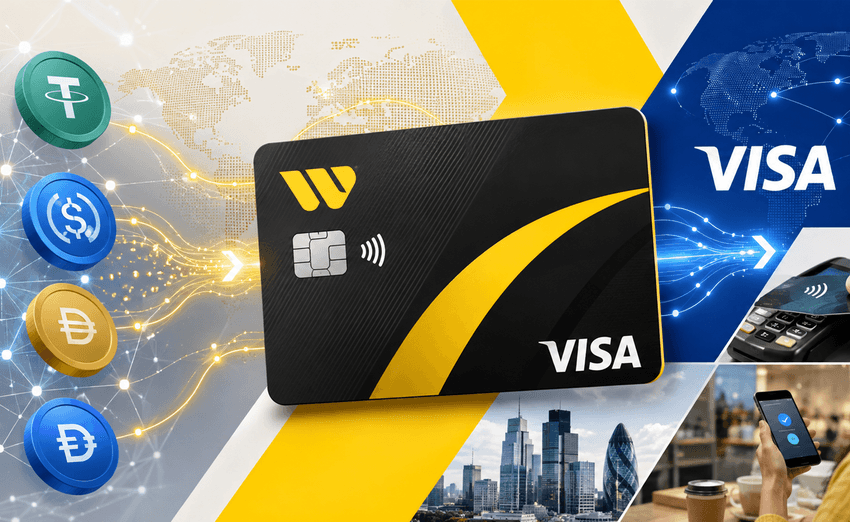

Western Union has launched Stablecard, a new financial product designed to bridge the gap between stablecoins and traditional payments.
The service officially debuted on August 4 across 37 markets, with plans to expand availability to more than 60 countries before the end of 2026.
Stablecard combines a digital wallet with a Visa debit card, enabling users to hold USDPT stablecoins while spending them anywhere Visa is accepted. Cardholders can also withdraw cash from ATMs and selected Western Union locations, giving users access to both digital and traditional payment channels.
The launch marks another major step in Western Union's ongoing transformation from a traditional remittance provider into a broader digital payments company.
In partnership with Rain, today we announced the launch of Stablecard by Western Union. Stablecard is a new Rain-powered @Visa card that lets remittance recipients hold dollar-backed stablecoins and spend them anywhere Visa is accepted. Read more: https://t.co/tLi9bx8pNH @USDPT_ pic.twitter.com/qaJT0YOyIi
— Western Union (@WesternUnion) August 4, 2026
In partnership with Rain, today we announced the launch of Stablecard by Western Union. Stablecard is a new Rain-powered @Visa card that lets remittance recipients hold dollar-backed stablecoins and spend them anywhere Visa is accepted. Read more: https://t.co/tLi9bx8pNH @USDPT_ pic.twitter.com/qaJT0YOyIi
— Western Union (@WesternUnion) August 4, 2026
Stablecoins Meet Everyday Payments
Stablecard eliminates the need for users to manually convert stablecoins into fiat currency before making purchases.
Through the accompanying mobile application, customers can manage their USDPT balances, make payments, and access their funds directly.
One of the platform's key features is Cash Redirect, which automatically converts eligible Western Union international money transfers into USDPT and deposits the funds into the user's digital wallet.
By combining blockchain settlement with Visa's payment infrastructure, the service aims to make cross-border transfers faster and more convenient while preserving access to the traditional financial system.
USDPT Runs on Solana
The Stablecard ecosystem is powered by USDPT, a stablecoin issued by Anchorage Digital Bank, the first federally chartered cryptocurrency bank in the United States.
USDPT is backed 1:1 by U.S. dollars, bank deposits, and short-term U.S. Treasury bills, helping maintain a stable value relative to the U.S. dollar.
The token operates on the Solana blockchain, allowing transactions to settle almost instantly while offering significantly lower fees than many traditional international payment methods.
Using blockchain infrastructure also reduces the need for complex settlement processes typically associated with cross-border remittances.
Western Union Expands Its Digital Strategy
The launch reflects Western Union's broader effort to modernize international payments through blockchain technology.
By incorporating stablecoins into its payment ecosystem, the company expects to reduce the need for pre-funding international transfers, improve capital efficiency, and accelerate settlement times between countries.
The strategy also positions Western Union to compete more effectively as digital assets increasingly reshape the global remittance industry.
Competition in Stablecoin Payments Accelerates
Western Union's announcement comes as stablecoins continue gaining traction across the financial sector.
Over the past year, major payment companies including Visa, Mastercard, and PayPal have expanded their stablecoin initiatives, while banks and financial institutions have accelerated the development of blockchain-powered settlement solutions.
For Western Union, Stablecard offers a modern alternative to traditional remittance services by combining:
- Blockchain-based settlement
- Visa's global acceptance network
- Western Union's established international payment infrastructure
As stablecoins continue moving beyond cryptocurrency trading into mainstream financial services, products like Stablecard illustrate how traditional payment providers are adapting to a rapidly evolving digital economy while offering customers faster, lower-cost cross-border payment options.


