

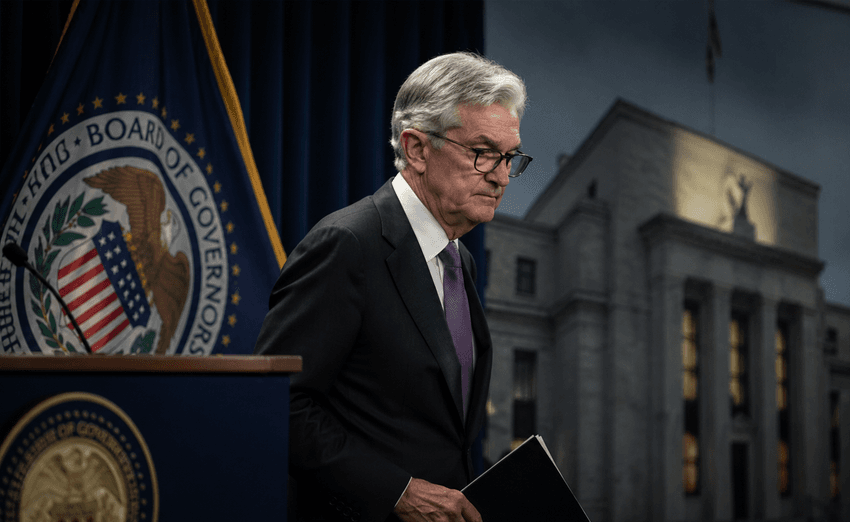

Fed Hits Pause Again on Interest Rates
The Federal Reserve kept its benchmark interest rate unchanged at 3.50%–3.75%, marking the fourth consecutive meeting without a move. The decision was widely expected, but it comes at a moment when economic signals are pulling policymakers in opposite directions.
In its official statement, the Fed emphasized a data-driven approach, noting it will “carefully assess incoming data, the evolving outlook, and the balance of risks” before making any future adjustments. That language signals caution rather than commitment, especially as inflation remains sticky while growth shows signs of slowing.
A Divided Fed Signals Uncertainty Ahead
Behind the headline decision, the split within the Fed is becoming more visible. There were four dissents, revealing a growing disagreement on where policy should go next.
Governor Stephen Mirran pushed for a 25 basis point rate cut, reflecting concerns about economic slowdown. Meanwhile, Beth Hammack, Neel Kashkari, and Lorie Logan took a more cautious stance, preferring to hold rates steady without signaling any easing bias.
This divide highlights a key tension: inflation risks remain elevated, but tightening policy further could deepen economic weakness.
Jerome Powell’s Final Meeting as Chair
This meeting is likely the last chaired by Jerome Powell, whose term ends on May 15. His departure marks a major transition moment for U.S. monetary policy.
Stepping into the spotlight is Kevin Warsh, who has already cleared a Senate Banking Committee vote and is expected to lead the Fed starting in June.
Warsh inherits a complicated environment. The hawkish tone from several policymakers suggests that pushing through rate cuts may not be easy, even if economic conditions begin to deteriorate.
Markets React: Yields Rise, Risk Assets Struggle
Financial markets showed a cautious response following the decision. U.S. equities edged lower, with the Nasdaq slipping slightly, while Treasury yields moved higher, signaling continued pressure from inflation expectations.
The 2-year yield climbed to 3.93%, while the 10-year reached 4.40%, reflecting investor concern that rates could stay elevated longer than expected.
Meanwhile, Bitcoin hovered just below $76,000, down modestly over the past 24 hours, as crypto markets also reacted to the broader macro uncertainty.
Oil Prices Add Pressure to the Inflation Puzzle
Energy markets are complicating the Fed’s decision-making process even further. Oil prices have rebounded sharply, with WTI crude approaching $105 per barrel, nearing post-war highs.
Rising energy costs feed directly into headline inflation, but they also act as a drag on economic activity. This creates a difficult balancing act for policymakers, who must weigh price stability against economic growth.
The Bigger Picture: A Policy Crossroads
The Fed now finds itself at a critical crossroads. On one side, inflation remains stubborn enough to justify caution. On the other, economic momentum is clearly weakening, raising the risk of overtightening.
With leadership about to change and internal disagreements becoming more pronounced, the next phase of U.S. monetary policy could look very different from the last.
Traders are now turning their attention to Powell’s final press conference, searching for any signals about how the Fed-and its incoming chair-might navigate the months ahead.


